
Topic overview
In brief
- The federal government is advancing regulations for autonomous vehicles while local officials remain cautious.
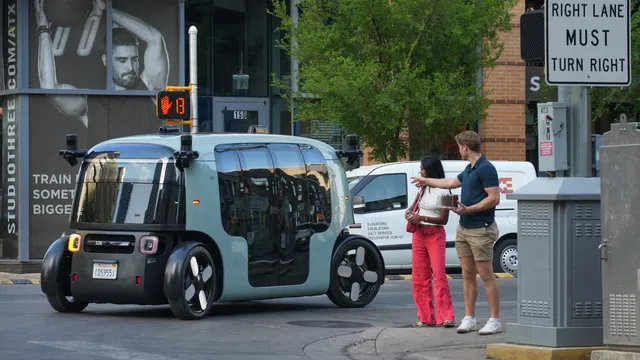
- Zoox received a temporary exemption to begin charging for rides in its robotaxi, signaling progress in the industry.
- Rep. Kevin Mullin's proposed bill aims to establish national safety standards for autonomous vehicle operators.
Summary
In the United States, the federal government is accelerating its efforts to regulate autonomous vehicles, while state and local officials are taking a more cautious approach. Recently, the National Highway Traffic Safety Administration granted Zoox a temporary exemption from eight federal motor vehicle safety standards, allowing the company to begin charging customers for rides in its custom-built robotaxi. This development is significant as it marks a step forward for the robotaxi industry, which has faced numerous regulatory hurdles. However, the industry is also under increased scrutiny regarding how autonomous vehicles interact with emergency responders. Rep. Kevin Mullin from California has expressed concerns over incidents where autonomous vehicles have interfered with emergency responders, leading him to propose a bill that would require federal regulators to establish minimum national safety standards for autonomous vehicle operators. This proposal highlights the growing need for a regulatory framework that ensures the safety of both passengers and emergency personnel. Meanwhile, other companies in the autonomous vehicle space, such as Waymo and Uber, are also preparing to launch their own robotaxi services, indicating a competitive landscape in the emerging market. The recent developments in the autonomous vehicle sector reflect a broader trend towards innovation in transportation, but they also raise important questions about safety and regulation that need to be addressed as the industry evolves.