
Topic overview
In brief
- Iran's Supreme National Security Council has issued eight demands to the US regarding the Strait of Hormuz.
- Recent attacks on commercial vessels in the strait have heightened tensions between Iran and the UAE.
- The situation could lead to significant geopolitical consequences if negotiations do not progress.
Summary
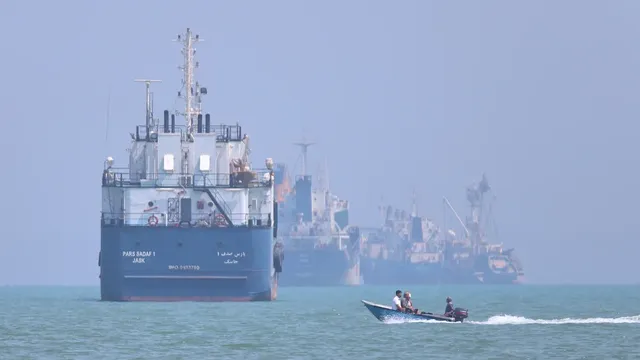
Iran has made significant demands to the United States regarding the reopening of the Strait of Hormuz, a crucial waterway for global oil transport. The Supreme National Security Council of Iran, led by Mohammad Bagher Zolghadr, stated that the strait will remain closed until the US corrects its behavior. This includes demands for the US to permanently end its military presence in the region, lift sanctions, and compensate Iran for war damages. The backdrop of these demands is a series of attacks on commercial vessels in the strait, which Iran claims are responses to ongoing conflicts in the region.
The situation escalated recently when a vessel owned by Abu Dhabi's state-owned ADNOC was attacked while transiting the Strait of Hormuz. The Emirati authorities reported that Iran fired a missile at the ship, part of a broader pattern of attacks on commercial shipping in the area. Since the onset of the war on Iran in February, ADNOC has reported multiple attacks on its vessels, resulting in casualties among crew members. The Iranian leadership has linked these attacks to the ongoing conflict with the Houthis in Yemen, suggesting a complex interplay of regional tensions.