
Topic overview
Briefly
- U.S. naval blockade cuts Iran's oil exports and revenue, but oil still flows via dark fleet.
- Iran's economy faces worse damage than war, prompting calls for action to end blockade.
- Iran develops evasive missiles, while U.S. interceptor stockpile runs low, straining forces.
What happened
The U.S. naval blockade, reimposed by President Donald Trump, is severely restricting Iran's ability to export crude oil and import essential goods, cutting off a vital source of revenue for the regime. This economic pressure comes amid a broader conflict that has already devastated Iran's conventional military capabilities through U.S.-Israeli bombardment. Despite the blockade, significant volumes of oil are still moving through the Strait of Hormuz, often via clandestine ship-to-ship transfers using a 'dark' fleet, contradicting Tehran's claims of a complete closure. The Trump administration has claimed that 8-9 million barrels per day are still getting out, while analysts estimate closer to 7 million, a sharp drop from the prewar level of 20 million. These flows, combined with pipeline exports, amount to about half of the prewar volume, providing some buffer for global energy markets.
Iran's economy, already in shambles before the war, is facing increasing strain from the blockade. Officials and business leaders in Tehran are warning that the economic damage could be worse than actual war. Majidreza Hariri, head of the Iran-China Joint Chamber of Commerce, recently admitted that the blockade will eventually inflict more economic damage than war and urged the regime to take any action necessary to end it, including negotiation, supplication, threats, or even war. He also emphasized the need to eliminate the perception in the U.S. that it can resort to such actions whenever it wants, warning of severe consequences.
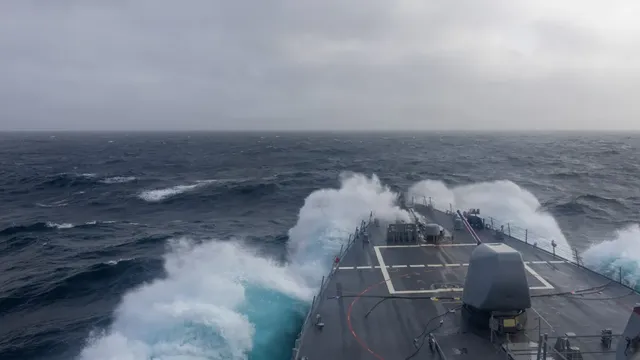
In response to the blockade and military setbacks, Iran has reorganized its military to be more aggressive and has developed new missiles that are better at evading air defenses, making U.S. military assets and allied oil infrastructure in the region more vulnerable. The U.S. military has expended much of its interceptor stockpile, which is now so low that it reportedly influenced Trump's decision to call off a major re-escalation of the war. Maintaining the naval blockade has also strained U.S. forces, with the U.S.S. Abraham Lincoln aircraft carrier struggling with mental health and supply issues after a record-long time at sea. A replacement carrier is on the way, but other ships involved in blockade operations are likely facing similar logistical concerns.
Meanwhile, rival oil exporters in the region are poised to increase their shipments. Satellite images show Saudi ships on both sides of the Strait of Hormuz preparing to transport oil out of the Persian Gulf, joining Iraq, Qatar, Kuwait, and the UAE in using the 'dark' fleet. This could lead to a surge in oil exports from the region, despite occasional Iranian attacks on tankers. The situation remains an uneasy equilibrium, with oil prices choppy but relatively in check and missiles still being launched without all-out war returning. However, this equilibrium is unlikely to last, as Iran's economy continues to crumble and the U.S. faces its own military readiness challenges.

Comprehensive report
Full story,
in detail.
Trace the developments that led here, see how the story evolved, and understand the forces and wider context surrounding it.