
Topic overview
Briefly
- Only 20% of European households have air conditioning, compared to nearly 100% in Japan.
- Japanese firms like Obayashi Corp. now shift outdoor work to cooler early morning hours.
- Corporate silence on climate action may be linked to a U.S. policy rollback and AI's energy toll.
What happened
A new report from reinsurance giant Swiss Re has issued a stark warning about Europe's vulnerability to extreme heat, revealing a significant adaptation gap compared to nations like Japan. The core of the disparity lies in the prevalence of air conditioning: almost every Japanese household has access to it, while only a fifth of European households do. This lack of basic cooling infrastructure leaves a large portion of the European population dangerously exposed during increasingly frequent and intense heat waves. The report frames this not just as a matter of discomfort but as a critical failure in climate adaptation, suggesting the continent is fundamentally ill-equipped to manage the health and economic shocks that accompany soaring temperatures.
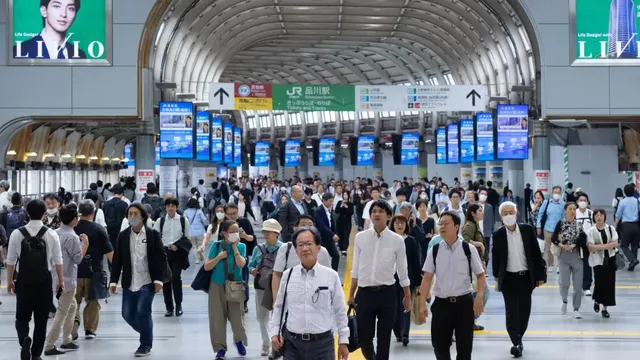
In Japan, the response to record-breaking heat extends far beyond the ubiquity of air conditioning. The government and private sector are actively implementing adaptive measures to protect workers and the public. A city government campaign this year encouraged office workers to abandon traditional business attire in favor of polo shirts and shorts, though many men were still observed in jackets and ties. More concretely, major employers are restructuring work schedules to avoid peak heat. Contractor Obayashi Corp. shifted its construction work hours from the standard 8 a.m. to 5 p.m. to an earlier 7 a.m. to 1 p.m. schedule at heat-exposed sites. Seibu Railway has installed air-conditioned rest areas equipped with refrigerators, and companies across the board are distributing cooling garments, salt tablets, fans, and heat-monitoring devices to their employees.
These adaptive strategies, while crucial for immediate safety, are acknowledged as insufficient for addressing the root causes of climate change. The article notes that rescheduling work or sports tournaments, much like shifting agricultural or fishing practices due to warming oceans, does nothing to mitigate the fundamental issues driving more extreme weather or reduce overall systemic risks. This observation points to a growing tension: the business case for tackling climate change is obvious, yet the increasing physical impacts are being met with a notable silence from the private sector, particularly in the United States. The article speculates that this corporate quietude may stem from a combination of factors, including the rollback of climate-change policies in Washington, a broader backlash against ESG (Environmental, Social, and Governance) investing, and a sensitivity about the rapidly growing emissions toll of power-hungry artificial intelligence technologies.
The broader context of the article touches on other significant economic and social currents. It challenges the simplistic question of whether AI is a bubble, with strategist Dhaval Joshi arguing the real issue is identifying which specific AI bubble is popping at any given moment as investors continuously misjudge and correct who will capture the technology's value. On immigration, the narrative of immigrants taking jobs is countered by Moody's chief economist Mark Zandi, who noted that foreign-born unemployment fell below native-born unemployment in October 2025. Furthermore, a crisis of trust is identified as a fundamental societal problem, with a sentiment that ordinary people do not trust companies, governments, or the tech industry, suspecting they are always devising new ways to exploit them. This trust deficit is paralleled by a report on the 'manosphere,' which is described not as a fringe online subculture but as a multibillion-dollar industry selling courses and supplements to insecure Gen Z men. Nobel laureate Daron Acemoglu connects the crises in AI and liberal democracy, suggesting both suffer from a tendency to escalate everything.

Comprehensive report
Full story,
in detail.
Trace the developments that led here, see how the story evolved, and understand the forces and wider context surrounding it.