
Topic overview
Briefly
- Sunflower sea stars have been devastated by a wasting disease, killing billions of sea stars.
- University of Washington researchers raised 20 sunflower stars in a lab and released them into the
- The release is part of a collaboration with the Samish Indian Nation to restore kelp forests.
What happened
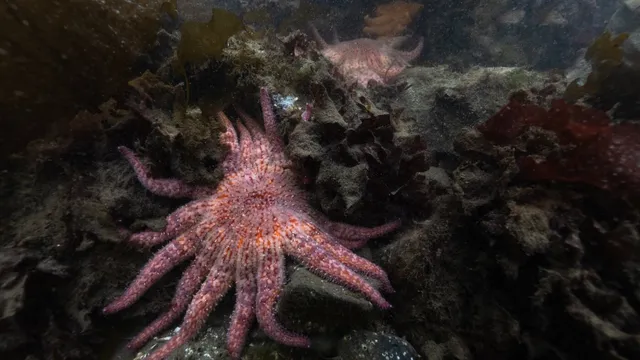
The sunflower sea star, once a common predator along the Pacific coast, has been driven to the brink of extinction by a devastating wasting disease that has killed billions of sea stars since 2013. This disease, which causes lesions and tissue decay, has been particularly lethal to sunflower stars, which can have up to 24 arms and grow to the size of a trash can lid. In response, researchers at the University of Washington's Friday Harbor Laboratories have been raising these stars in captivity, developing methods to treat the disease when it appears in their lab. After years of careful husbandry, they have successfully raised a cohort of three-year-old sunflower stars, each about the size of a human hand. On a recent day, the researchers loaded 20 of these stars into tubs and transported them by boat to a location near the San Juan Islands, where they were released into the wild. This release is part of a collaborative effort with the Samish Indian Nation, a tribe that has deep cultural and ecological ties to the region. The Samish have been actively working to restore the health of local marine ecosystems, including kelp forests, which are vital habitats for many species. Sunflower stars play a crucial role in these ecosystems by preying on sea urchins, which, if left unchecked, can decimate kelp forests. The release of these 20 stars is a significant step in the recovery of the species, but it is just the beginning. The researchers and the tribe hope that these stars will survive, reproduce, and help restore the balance of the underwater ecosystem. The Samish tribe's involvement is particularly meaningful, as they have faced historical challenges, including the loss of fishing rights due to a clerical error, and are working to reclaim their cultural and ecological heritage. This release represents a hopeful moment in the ongoing efforts to conserve a species that is critical to the health of the Pacific Ocean.

Comprehensive report
Full story,
in detail.
Trace the developments that led here, see how the story evolved, and understand the forces and wider context surrounding it.