
Topic overview
Briefly
- A patient with a delusion attacked Dr. Karl Deisseroth during his neurosurgery residency.
- This event caused Deisseroth to abandon neurosurgery and dedicate his career to psychiatric research
- His team now captures real-time brain activity with millisecond precision to study complex mental
What happened
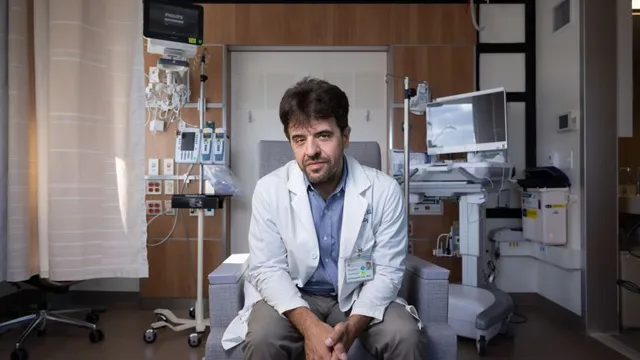
Dr. Karl Deisseroth, a bioengineer, neuroscientist, and psychiatrist at Stanford University, is leading a research program aimed at decoding how brain cells create emotions and feelings. His work focuses on understanding the neural circuitry underlying complex and severe mental health conditions, such as schizoaffective disorder and borderline personality disorder. The Human Neural Circuitry program, which he leads, operates within an inpatient hospital setting, allowing for a unique combination of cutting-edge neuroscience and direct patient interaction. The program's key innovation is the ability to collect and analyze real-time electrical activity from the brain with millisecond precision, providing an unprecedented view of what happens in the brain exactly as symptoms or problems occur. This approach moves beyond traditional methods by capturing the dynamics of neural activity during complex and previously private symptoms, with the ultimate goal of developing treatments that relate to neural circuitry dynamics as they happen in the moment.
Deisseroth's personal motivation for this work stems from a traumatic experience during his late residency as a neurosurgeon at Stanford Medicine. A patient, suffering from a delusion that Deisseroth was scheming against him, attacked the doctor in a moment of intense anger, rage, and fear. This shocking, face-to-face encounter with severe psychiatric suffering profoundly impacted Deisseroth. Instead of being deterred, he was compelled to change his career path entirely, dedicating his life to understanding the brain and psychiatric disorders. He describes this type of suffering as "next level" and views his current research as a way of coming full circle to that formative patient experience.
Deisseroth is already widely acclaimed for his earlier breakthrough invention of optogenetics, a revolutionary technology that uses beams of light to control specific brain cells. This technique, which combines optics and genetics, has become a fundamental tool for thousands of researchers worldwide, enabling detailed study of the brain, cardiac tissue, stem cells, and organism development. It can trigger or block responses like pain while providing insight into the underlying processes. Deisseroth contrasts the brain with other organs, noting that while the heart can be modeled as a pump, a comparable mechanistic model for the brain's function is still lacking, making it much harder to fix. The Human Neural Circuitry program is designed to bridge this gap by providing that deep, mechanistic understanding.
Recent findings from the program, published in the journal Science in May 2025, demonstrate the broad applicability of this research. A study found that humans and mice share persistent brain-activity patterns in response to a mildly adverse sensory experience, specifically an eye puff test. This discovery underscores the potential of the program to uncover fundamental principles of brain function that are conserved across species. Deisseroth believes there is no limit to the disorders that can be studied under these conditions, and he is committed to continuing this work until treatments are developed that directly address the real-time neural circuitry dynamics of mental illness.

Comprehensive report
Full story,
in detail.
Trace the developments that led here, see how the story evolved, and understand the forces and wider context surrounding it.