
Topic overview
In brief
- NASA engineers executed a complex maneuver on Voyager 2 to address power supply issues.
- The maneuver is expected to extend the spacecraft's operational life by two years.
- Both Voyager spacecraft are approaching their 50th anniversaries in space next year.
Summary
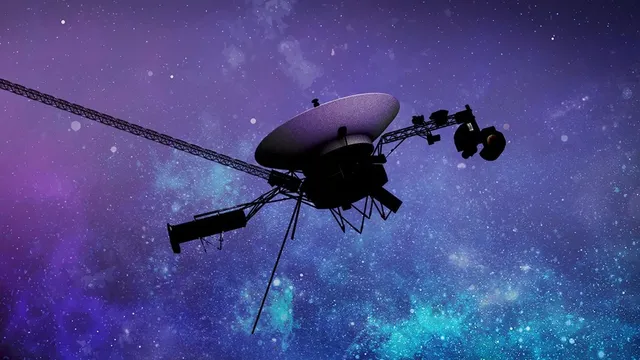
In the United States, NASA's Voyager 2 spacecraft, launched in 1977, has been facing critical power supply issues as it approaches its 50th anniversary in space. Engineers at NASA's Jet Propulsion Laboratory have successfully executed a complex maneuver known as the 'big bang' to address these challenges. This procedure is expected to extend the spacecraft's operational life by an additional two years, allowing it to continue its exploration of the interstellar medium. Voyager 1, its twin, is also set to undergo similar procedures in the near future.
The Voyager missions have been remarkable achievements in space exploration, with Voyager 2 completing a grand tour of the outer solar system, including flybys of Jupiter, Saturn, Uranus, and Neptune. However, as the spacecraft age, the decay of plutonium fuel has forced NASA to gradually shut down scientific instruments to conserve power. This has raised concerns about the spacecraft's ability to maintain operational temperatures, particularly in the fuel lines that power its thrusters. Engineers have been closely monitoring the power supplies and making strategic decisions to prolong the missions.