
Topic overview
Briefly
- A solar farm project in Horningsea has been approved to power over 13,000 homes.
- The development will run for 40 years and includes a battery energy storage facility.
- Local officials express concerns about the impact on the green belt and the long-term effects on the countryside.
What happened
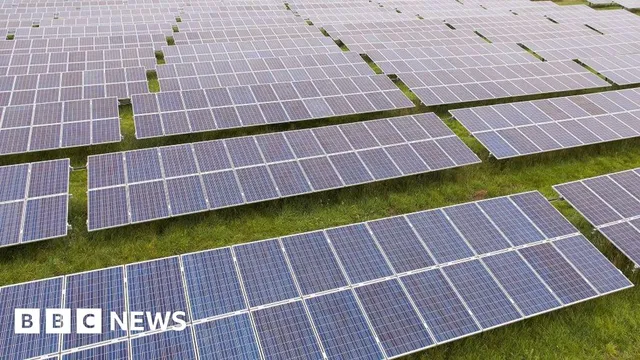
In the Cambridgeshire countryside, a solar farm project has received approval from the South Cambs District Council, despite concerns regarding its impact on the green belt. The development, which spans 74 hectares (183 acres) at Low Fen Drove Way in Horningsea, is expected to generate enough energy to power over 13,000 homes. It will also include a battery energy storage facility and is planned to operate for 40 years before being restored to agricultural use. The council's officers classified the land as grey belt, indicating it contributes minimally to the green belt, which played a significant role in the decision-making process.
The developer, Innova Renewables, argued that the solar farm would provide significant benefits, supporting both local and national renewable energy goals and decarbonization targets. This aligns with the council's declaration of a climate emergency in 2019 and its commitment to reducing area-wide emissions by 50% by 2030 and achieving net zero by 2050. The urgency of addressing climate change was emphasized by the developer's agent, who pointed to the current climate conditions affecting the UK and Europe.
However, the approval has sparked a debate among local officials and residents. Anna Bradnam, a Liberal Democrat ward councillor, expressed her concerns about the long-term impact of the solar farm, stating that 40 years is a significant duration that could degrade the countryside. She lamented the erosion of strong green belt protections, suggesting that the development would industrialize the area. Fellow Liberal Democrat Vivien Biggs acknowledged the challenges of having such a project nearby but emphasized the need for pragmatic solutions.
Conservative councillor Heather Williams highlighted the complexities of planning, noting that trade-offs are often necessary. While she recognized the merit of the solar farm's objectives, she also pointed out that it conflicts with several existing policies. The discussion reflects a broader tension between the need for renewable energy and the preservation of green spaces, as farming communities increasingly look to solar energy as a viable option in the face of changing agricultural conditions. The future of the sewage treatment works in Cambridge, which is adjacent to the proposed solar farm site, remains uncertain, adding another layer of complexity to the situation.

Comprehensive report
Full story,
in detail.
Trace the developments that led here, see how the story evolved, and understand the forces and wider context surrounding it.