
Topic overview
Briefly
- The U.S. Chemical Safety Board's report identified multiple preventable safety issues leading to the explosion.
- The explosion was caused by the improper cleaning of a valve, which was overpressurized and failed.
- U.S. Steel is urged to implement safety measures to prevent future incidents and honor the memory of the victims.
What happened
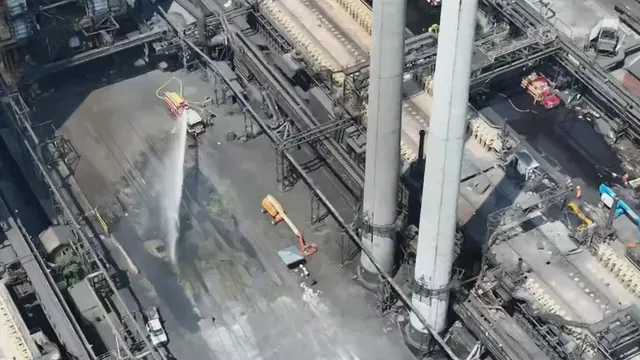
In the United States, a tragic explosion occurred at U.S. Steel's Clairton Coke Plant, resulting in the deaths of two employees. The U.S. Chemical Safety Board (CSB) conducted an investigation into the incident and released its final report, which highlighted multiple preventable safety issues that contributed to the explosion. The report indicated that the explosion was primarily caused by the improper cleaning of a 70-year-old valve, which broke and ignited coke oven gas. Workers had been using water and overpressurizing the valve, which was rated for only 50 pounds of pressure, leading to its failure. The CSB noted that the valve had been cleaned incorrectly for years, raising questions about why it had not failed sooner. The investigation revealed that U.S. Steel lacked a formalized procedure for safely cleaning the valve, despite management being aware of the practice.
Additionally, the report pointed out significant safety concerns regarding the facility's layout. The proximity of employee workspaces to hazardous processes was identified as a critical issue. Had the buildings been situated further away from the coke batteries, the severity of the incident could have been mitigated. The CSB emphasized that U.S. Steel had multiple opportunities in the past to address these safety concerns but failed to take action.
The report also criticized the company's process safety management systems, stating that even if not required by regulation, U.S. Steel should have implemented safety measures voluntarily to protect its employees. The CSB recommended that the company evaluate the distances between buildings and hazardous processes, develop a written procedure for washing valves with pressurized water, and create a comprehensive process safety management system. In response to the report, U.S. Steel expressed appreciation for the CSB's work and committed to reviewing its recommendations thoroughly. The company also held a remembrance event for the victims, emphasizing the importance of safety discussions to prevent future incidents.

Comprehensive report
Full story,
in detail.
Trace the developments that led here, see how the story evolved, and understand the forces and wider context surrounding it.