
Topic overview
Briefly
- Thieves stole four Antonello da Messina artworks from MuMe museum in Messina, Sicily, on August 15,
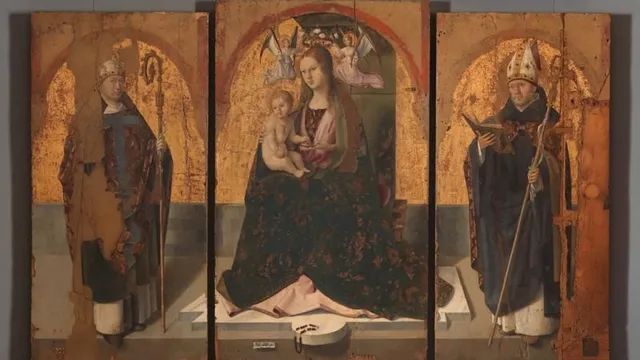
- The stolen pieces include three panels of the San Gregorio Polyptych and a double-sided panel of the
- The theft occurred during Ferragosto holiday, and police have not yet recovered the artworks.
What happened
On the night of August 15, 2026, during Italy's Ferragosto national holiday, thieves broke into the Regional Interdisciplinary Museum of Messina (MuMe) in Sicily and stole four artworks attributed to the 15th-century Renaissance master Antonello da Messina. The theft occurred around 10 p.m. while the city was distracted by the traditional La Vara religious festival celebrating the Assumption of the Virgin Mary. The thieves bypassed the museum's alarm and security systems, gaining access to a secure display case and removing the artworks.
The stolen pieces include three of the five surviving panels of the San Gregorio Polyptych, an altarpiece originally composed of six panels created for the Monastero di San Gregorio, which was destroyed in the 1908 Messina earthquake. This polyptych was the only work by Antonello that had never left his hometown. The fourth stolen artwork is a small double-sided panel depicting the Virgin and Child with a Franciscan monk on one side and Christ on the other. This piece belonged to the Wilhelm Soldan collection and was sold by Christie's to the Sicilian regional government in 2003, the year it was attributed to Antonello.
The theft has devastated museum officials and the local community. MuMe director Marisa Mercurio told ANSA, "We are devastated by what happened. They were two of Antonello da Messina's most important and best-known works. It is a tremendous loss for the museum, the city, the community and the art world." Italian Culture Minister Alessandro Giuli expressed his "dismay and regret," calling the pieces of "extraordinary value for our cultural heritage." Messina's mayor, Federico Basile, described the theft as a "heinous criminal act" and said he was "deeply outraged," particularly because it occurred during the city's religious celebrations. He vowed that "Messina will not let its history be stolen."
The theft comes just days after Italian police recovered three paintings by Paul Cezanne, Pierre-Auguste Renoir, and Henri Matisse that were stolen from the Magnani Rocca Foundation near Parma in March 2026. That recovery involved the detention of five people. The Antonello theft also follows the Italian government's purchase in March 2026 of Antonello's "Ecce Homo" for $14.9 million at a Sotheby's auction in New York, which had raised the painter's profile.
Art-crime analyst Lynda Albertson, CEO of the ARCA art crimes research association, noted that the stolen works are instantly recognizable, making it difficult to sell them through legitimate channels. She told La Repubblica, "Stealing an Antonello may be far easier than selling one. If these are ordinary thieves, they will soon discover that – to their cost." She explained that such famous artworks often pass from one criminal to another, serving as collateral for other illicit activities. The museum remained closed on Sunday as investigators gathered evidence, and no arrests had been reported.

Comprehensive report
Full story,
in detail.
Trace the developments that led here, see how the story evolved, and understand the forces and wider context surrounding it.