
Topic overview
In brief
- Most of Vancouver Island's productive old-growth forests have been logged, with only about 20% remaining.
- Activists are protesting logging activities in the Walbran Valley, raising tensions over forest management on traditional territories.
- The ongoing fight to protect old-growth forests highlights the need for a balance between economic development and conservation.
Summary
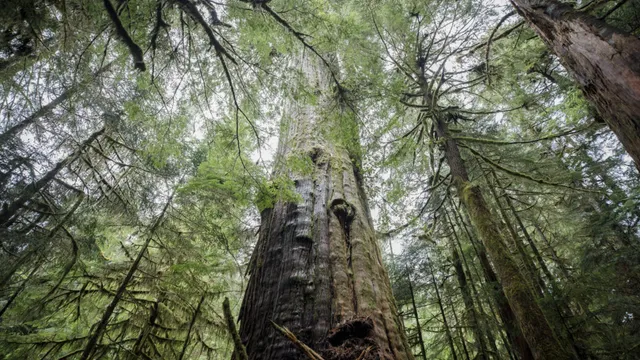
In British Columbia, the logging of old-growth forests has become a contentious issue, particularly on Vancouver Island, where most of the productive old-growth forests have been cut down since industrial logging began over a century ago. Currently, only about 20% of these forests remain, and many of the remaining areas are still open to logging. Activists have returned to the forests to protest against logging activities, especially in the Walbran Valley, where tensions have arisen over the management of traditional territories. The logging is being conducted by Tsawak-qin Forestry, a company co-owned by the Huu-ay-aht First Nation and Western Forest Products, raising questions about economic development versus conservation within Indigenous communities. The forests minister, Ravi Parmar, has indicated that if a long-term agreement with the Pacheedaht Nation is not reached before the expiration of the Fairy Creek deferral, he would seek another extension. Since 2021, the province has deferred or protected 2.4 million hectares of old growth, but critics argue that many of these measures are temporary and that logging continues in some deferred areas. Forest ecologist Andy MacKinnon has warned that once an old-growth forest is logged, it may take millennia to recover, if it can recover at all, especially in the context of climate change. The forests are not only vital for ecological reasons but also drive tourism, which some researchers argue has greater value than lumber. However, the transition away from old-growth logging is complex and cannot happen overnight, as Parmar noted, emphasizing the need for investments in second-growth timber milling. Activists, including longtime blockaders like Steven Daniluk, express a deep personal connection to the forests, viewing their protection as a critical fight against environmental degradation. The loss of these forests is not just about trees; it reflects a broader disconnection between people and nature, as highlighted by Pacheedaht elder Jones, who emphasizes the importance of preserving these connections for future generations.