
Topic overview
Briefly
- Members spend months handcrafting suits for Mardi Gras day marches through New Orleans neighborhoods
- Big Chief Demond Melancon sews from 6 AM to midnight daily despite being put out of his house
- Spirits descend when the suit is worn, transforming the wearer into their ceremonial identity
What happened
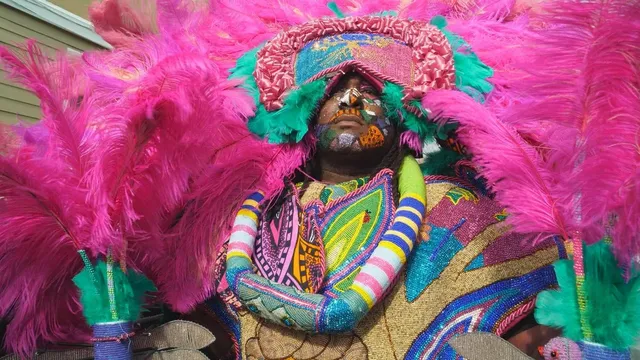
The tradition of the Mardi Gras Indians, also known as Black Masking Indians, represents a deeply rooted cultural practice in New Orleans, Louisiana, that has persisted since the 1800s. This tradition involves members of the community spending months meticulously handcrafting elaborate suits that are worn while marching through the city's neighborhoods. The suits are not merely costumes but are considered sacred artistic expressions that embody spiritual significance and cultural heritage. Big Chief Demond Melancon, a prominent figure within this tradition, dedicates an extraordinary amount of time to creating his suit, sewing from 6 in the morning until midnight every single day. This intense commitment demonstrates the profound personal sacrifice and artistic devotion required to participate in this cultural practice. The suits are intricate works of art that can cost thousands of dollars to produce, reflecting both the financial investment and the countless hours of labor that go into their creation.
The spiritual dimension of the Mardi Gras Indian tradition is particularly significant, as evidenced by Big Chief Demond Melancon's description of the experience. When he puts on the suit, he transforms into his identity as Big Chief Demond Melancon, suggesting a separation between his everyday self and the ceremonial persona he embodies on Mardi Gras day. He speaks of spirits descending every time the suit is worn, indicating that the practice is not simply about display but involves a profound spiritual connection and transformation. This spiritual aspect is so powerful that it affects him personally, suggesting that the suits serve as conduits for ancestral and cultural spirits. The music associated with the tradition is also integral, as Big Chief Demond notes that no one in New Orleans sews an Indian suit without playing the associated music, highlighting how the auditory and visual elements of the tradition are inseparable.
The circumstances surrounding Big Chief Demond Melancon's situation reveal personal challenges that intersect with his cultural practice. He faced housing instability, having been put out of his house, which adds a layer of difficulty to his already demanding commitment to sewing. Despite these challenges, he continued his work, demonstrating resilience and dedication to maintaining cultural traditions even in the face of personal hardship. The conversation also reveals that there was a year when he could not march with his tribe, as indicated by the question about what it was like to see his tribe march off without him. This separation from the culminating event of his months of preparation represents a significant emotional and cultural loss, as the act of marching through the neighborhoods on Mardi Gras day is the ultimate expression of the tradition.
The broader significance of the Mardi Gras Indians extends beyond individual participants to encompass community identity and historical continuity. Big Chief Demond emphasizes the importance of letting the world know that they are here and have been here, pointing to a desire for recognition and visibility that has been historically denied to this community. The tradition serves as a form of cultural preservation and resistance, maintaining African and Indigenous influences that have been part of New Orleans culture for centuries. The fact that this practice has continued since the 1800s demonstrates its resilience and importance to the community, surviving through periods of social change, economic challenges, and cultural suppression. The suits themselves are archives of cultural memory, with each bead and feather representing connections to ancestors and traditions that might otherwise be lost.

Comprehensive report
Full story,
in detail.
Trace the developments that led here, see how the story evolved, and understand the forces and wider context surrounding it.