
Topic overview
Briefly
- The Philadelphia Parking Authority has expanded its Smart Loading Zones program to 52 blocks in Center City.
- Drivers must register their vehicles on the CurbPass website and are charged for parking in these zones.
- The program aims to improve traffic flow and curb management, despite concerns from some drivers about privacy.
What happened
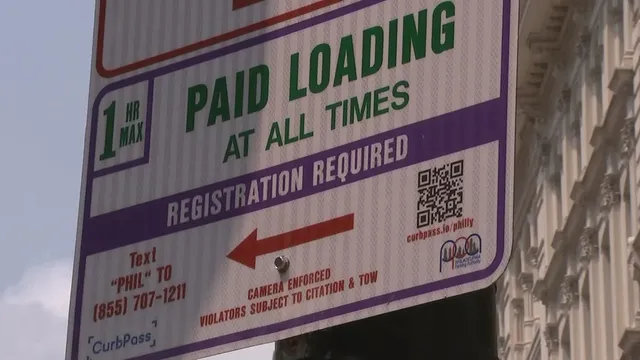
In Philadelphia, the Philadelphia Parking Authority (PPA) has expanded its Smart Loading Zones program to cover a total of 52 blocks in Center City. This initiative, which began last year, utilizes camera technology to monitor how long vehicles remain parked in designated loading zones. If a vehicle exceeds the allowed time, penalties are imposed. The program charges drivers 10 cents per minute for parking, with a maximum duration of one hour. If a vehicle remains parked longer than this period, a $51 ticket is issued. Additionally, if a vehicle is not registered and is parked for more than three minutes, the driver also faces a $51 fine.
The PPA has reported significant revenue from this program, collecting nearly $4.8 million in fines from May 2025 to July 2026. Approximately 7.5% of these fines were issued for double-parking violations, which carry a $76 penalty. The PPA's Acting Executive Director, Gabe Roberts, emphasized that the primary goal of the Smart Loading Zones is to improve traffic flow and curb management rather than to generate revenue. The program aims to alleviate congestion caused by double-parked vehicles, which often lead to gridlock in busy areas.
Despite the program's intentions, some drivers have expressed concerns about privacy and the extensive use of cameras to monitor parking. Many drivers, including Dwayne Payne, reported being unaware of the program and its regulations, raising questions about the effectiveness of communication regarding the new rules. The PPA has installed additional signage in the area to inform drivers about the requirements for parking in these zones, which now state, "Paid Loading At All Times. Registration Required."
The expansion of the Smart Loading Zones program reflects a growing trend in urban areas to utilize technology for better traffic management. As cities face increasing congestion and parking challenges, similar initiatives may be adopted elsewhere to enhance the efficiency of urban transportation systems. The PPA's approach highlights the balance between enforcing parking regulations and ensuring that drivers are adequately informed about their responsibilities while using public roadways.

Comprehensive report
Full story,
in detail.
Trace the developments that led here, see how the story evolved, and understand the forces and wider context surrounding it.