
Topic overview
In brief
- Wildfires in Wales this summer have destroyed habitats, particularly affecting rare species.
- Nick Thomas from NRW stated that recovery of vegetation could take centuries if peat soil is incinerated.
- The community must take action to prevent future wildfires and protect the countryside.
Summary
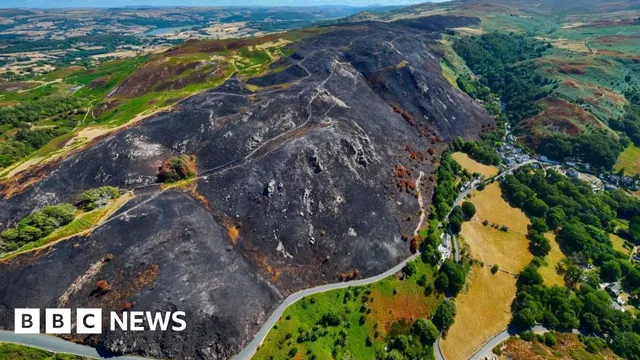
In Wales, wildfires this summer have caused significant destruction to habitats, particularly affecting rare species such as snakes and moths. Nick Thomas from Natural Resources Wales (NRW) highlighted that if the soil in upland areas rich in peat was incinerated, it could take centuries for the vegetation to recover, as peat grows at a rate of about a millimeter per year. The wildfires were so intense that they were visible from space, marking what Thomas described as potentially the worst year for wildfires in Wales. A previous wildfire in 2018 on Mynydd Llantysilio incinerated about 10cm of peat, and even eight years later, large patches remain devoid of heather. This year, the area has also seen a notable increase in heather beetles, possibly due to milder winters, further complicating the recovery of the ecosystem. The RSPB Cymru expressed concern over the impact of wildfires on breeding birds and fragile habitats, which can take years to fully recover. Julian Thompson, warden of Pensychnant Conservation Centre, reported that a wildfire in July destroyed about a third of the reserve's 150 acres, turning the soil to dust and eliminating many species, including snakes and invertebrates. He lamented the tragic loss of wildlife and emphasized the need for better management of moors and heaths to reduce fuel loads and prevent future fires. The community's connection to the land has been deeply affected, and Thompson urged for a collective effort to respect and protect the countryside to prevent further devastation. With new fires occurring weekly, the urgency for action has never been greater.