
Topic overview
Briefly
- Commonwealth and NSW will share costs of gun buyback after Bondi shooting
- Compensation for surrendered firearms starts November 2, 2026
- Up to 274,000 registered guns in NSW affected by new ownership limits
What happened
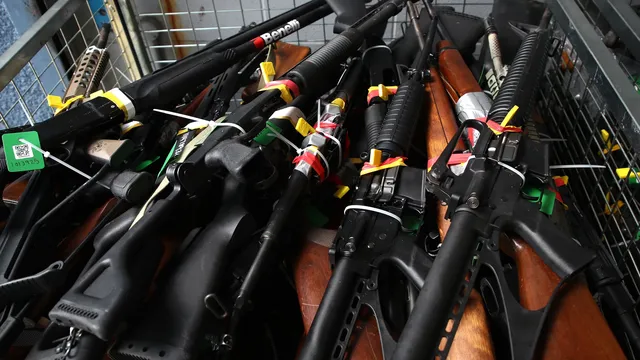
In the aftermath of the deadly December 2025 shootings at Bondi Beach, the Australian federal government and the New South Wales (NSW) state government have reached an agreement to implement a major gun buyback scheme. The announcement was made by Prime Minister Anthony Albanese on Sunday, August 16, 2026, during a press conference. The buyback is part of a broader response to the attack, which also included measures to combat anti-Semitism, as the shootings were considered a terrorism event.
The scheme will be jointly funded, with the Commonwealth and NSW each covering 50% of the administration costs, while the Commonwealth will fully fund the destruction of surrendered weapons. Compensation will be paid from November 2, 2026, to individuals who surrender firearms that exceed new ownership limits or that have been reclassified, as well as a flat fee for associated ammunition. Financial assistance will also be provided to businesses and industry to help them adjust to the reforms.
NSW had already tightened its gun laws in the days following the attack, introducing ownership limits, reclassifying certain weapons, boosting background checks, and reducing firearms licences from five years to two. The buyback is seen as the next step in these reforms. Premier Chris Minns stated that as a result, NSW will have the toughest gun laws of any state in Australia and some of the toughest in the world. He acknowledged that the reforms are not universally supported but insisted they are necessary to keep the community safe.
The buyback is expected to affect up to 274,000 registered firearms, about 24% of the total in NSW, and some 50,000 licence holders. Prime Minister Albanese noted that there are more guns in Australia today than at the time of the Port Arthur massacre, which led to significant gun law reforms under the Howard government. He emphasized that the new measures are about strengthening Australia's gun laws and keeping the community safer.
The scheme is informed by the recommendations of the antisemitism royal commission, which was established to investigate the rise of anti-Semitism in Australia. The government's dual approach aims to address both the motivation and the method of the attack.

Comprehensive report
Full story,
in detail.
Trace the developments that led here, see how the story evolved, and understand the forces and wider context surrounding it.