
Topic overview
Briefly
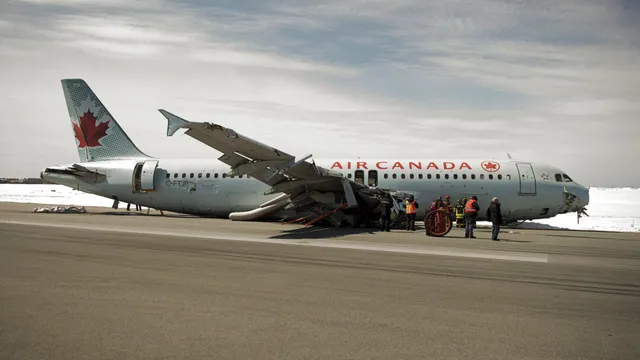
- In March 2015, Air Canada Flight 624 crashed while landing in Halifax, injuring 25 passengers.
- The Supreme Court of Nova Scotia approved an $18 million settlement for the class-action lawsuit.
- The resolution allows affected passengers to receive compensation and highlights improvements in safety procedures.
What happened
In March 2015, an Air Canada flight, designated as Flight 624, encountered severe weather conditions while approaching Halifax Stanfield International Airport in Canada. The aircraft, which was traveling from Toronto, struck power lines during a snowstorm and landed approximately 200 meters short of the runway. This incident resulted in injuries to 25 of the 133 passengers on board, with injuries ranging from minor scrapes to more serious conditions such as knee, back, and shoulder injuries, as well as post-traumatic stress. Fortunately, there were no fatalities reported.
Following the crash, a class-action lawsuit was initiated against Air Canada, Nav Canada, and the Halifax International Airport Authority. The legal proceedings were complex and lengthy, taking over two years of negotiations to reach a resolution. The Supreme Court of Nova Scotia ultimately approved a settlement amounting to $18,075,000, which includes legal fees and expenses. Air Canada is responsible for the majority of the settlement, contributing more than $15 million, while Nav Canada will pay $2 million, and the Halifax International Airport Authority will cover $1 million.
The settlement has been viewed as a positive outcome for all parties involved, as it allows the affected passengers to receive compensation without further delay. Air Canada expressed satisfaction with the resolution, emphasizing their commitment to safe and secure airport operations. The spokesperson for Air Canada noted that the company had engaged in extensive negotiations with the plaintiffs' lawyers to address individual cases.
In the aftermath of the crash, the Transportation Safety Board conducted an investigation, which revealed that the flight crew did not follow standard operating procedures that would have required them to cross-check their altitude and distance. This procedural gap has since been addressed. Additionally, the airport has made significant upgrades to its navigation and lighting infrastructure to enhance safety. The incident highlighted the importance of having backup power systems, as the airport's radio network failed during the emergency, complicating evacuation efforts after responders declared the site clear.

Comprehensive report
Full story,
in detail.
Trace the developments that led here, see how the story evolved, and understand the forces and wider context surrounding it.