
Topic overview
Briefly
- A Syrian court sentenced former President Bashar al-Assad to death in absentia last week.
- The judge who issued the verdict had himself been sentenced to death by Assad's regime in 2013.
- Experts say the sentencing is symbolic but more trials are needed to achieve full transitional.
What happened
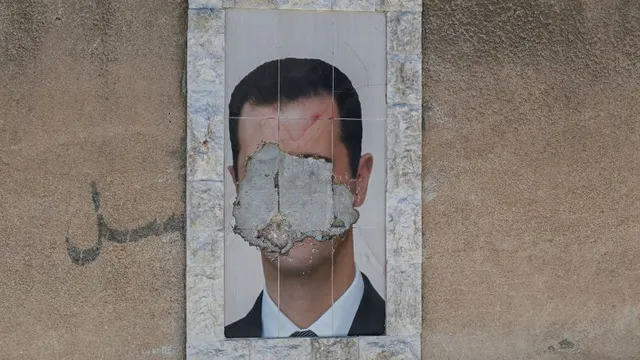
In a landmark move for Syria's post-war justice system, a court in Damascus sentenced former President Bashar al-Assad to death in absentia. The verdict, delivered last week, marks the first time a senior figure of the ousted regime has been formally condemned for crimes committed during the country's brutal civil war. The judge who presided over the case, Fakhr al-Din al-Aryan, had himself been sentenced to death in absentia by Assad's regime in 2013 after he defected from the Ministry of Justice and joined opposition judicial bodies. His reinstatement as a judge following Assad's ouster in December 2024 symbolizes the shift toward transitional justice in Syria.
The sentencing is seen as both historic and symbolic, but experts caution that it is only a first step. Ibrahim al-Assil, a senior research fellow at the Harvard Kennedy School's Middle East Initiative, called the sentences "significant politically and significant emotionally," but stressed that justice is only one of the four pillars of transitional justice, alongside truth, reparation, and guarantees of non-recurrence. He noted that the trial raises questions about whether new institutions in Syria can differentiate between justice under Assad and justice post-Assad. The justice ministry defended the proceedings, saying they complied with Syrian law and included victim participation.
Fadel Abdul Ghany, founder of the Syrian Network for Human Rights, which has documented regime atrocities since 2011, argued that more cases are needed, especially against the highest-ranking officials, to reduce public anger and allow Syria to move forward. Al-Assil agreed that localized trials should follow to bring as many perpetrators as possible to justice. He also highlighted that transitional justice must address the needs of families still searching for disappeared loved ones, noting that justice may look different for a family in Homs compared to one in Dara'a.
The death sentence complicates any potential extradition of Assad, who fled to Russia in December 2024. Russian President Vladimir Putin is unlikely to hand him over, and experts say the decision would be more political than legal. Despite this, the verdict is a milestone for Syria's international rehabilitation. The United States has lifted most sanctions, Arab nations have renewed ties, and French President Emmanuel Macron visited in July 2025, the first Western leader to do so since 2024. Syria also reached an agreement with Moscow over two key Russian military bases, transferring them to Syrian control.
However, entrenched challenges remain. Tensions between the Syrian Army and the Druze minority in the south continue to cause deadly clashes, and friction persists between Arab and Kurdish communities in the northeast. The government has also faced violence against the Alawite minority along the coast. Al-Assil emphasized the need for a national dialogue to address ethnic and minority divisions and to define Syria's future, a process that has yet to materialize.

Comprehensive report
Full story,
in detail.
Trace the developments that led here, see how the story evolved, and understand the forces and wider context surrounding it.