
Topic overview
Briefly
- More than 1,500 ships have been stranded in the Strait of Hormuz since February due to the war with
- Idle ships accumulated dense marine life on hulls over months instead of the normal one to three day
- Scientists warn these organisms will spread globally as invasive species when trade resumes, causing
What happened
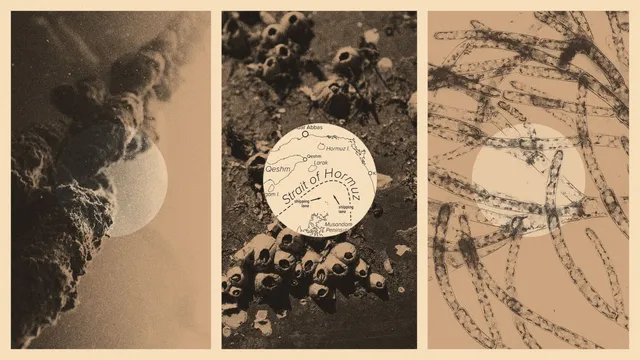
The ongoing war with Iran has created an unprecedented ecological threat in the Strait of Hormuz, where more than 1,500 ships have been stranded since February. A study published in the journal Biological Invasions warns that these stationary vessels are accumulating dense layers of marine life on their hulls, a process known as biofouling. Normally, ships remain at anchor for only one to three days, limiting organism growth. However, these vessels have been idle for months, allowing microbes, algae, barnacles, and other invertebrates to establish robust communities. The Persian/Arabian Gulf is already home to more than 50 marine nonnative species, and many native species from this region have historically been introduced across the globe. The current situation is different because the extended stationary period has given these organisms an unusual opportunity to proliferate.
The organisms accumulating on the ship hulls are particularly concerning because they are adapted to extreme conditions. Mario Tamburri, a professor at the University of Maryland Center for Environmental Science and the study's lead author, explained that these tolerant organisms make good candidates for invasions when they reach new locations. Once trade resumes and these ships reenter the global shipping network, the encrusted marine life can hitchhike to ports around the world. The ecological consequences could be severe, as marine invasive species have profound impacts on coastlines globally. Carolyn Tepolt, a biologist at the Woods Hole Oceanographic Institution and co-author of the study, noted that these species are extremely difficult, if not impossible, to eradicate once established.
The economic ramifications extend beyond ecological damage. Biofouling increases drag on ships as they move through water, leading to extra fuel consumption and increased exhaust emissions. Invasive species can disrupt fisheries and aquaculture operations, requiring significant financial resources to manage. April Blakeslee, an associate professor of biology at East Carolina University and co-author of the study, highlighted that these organisms can also perpetuate the spread of parasites and diseases entrained within ship ballast tanks or associated with organisms attached to hulls. The study emphasizes that current ship biofouling management and regulatory frameworks are insufficient to mitigate the impacts of large-scale, unplanned vessel lay-up events.
While the human and economic consequences of the war remain the highest priority, the researchers stress that ecological impacts cannot be overlooked. The Strait of Hormuz situation represents a specific current risk, but climate change and warming temperatures are already increasing the global spread of invasive species. The study calls for attention to this overlooked consequence of geopolitical conflict, warning that the marine communities now thriving on these stranded ships could fundamentally alter ecosystems worldwide once they are released into new waters. The combination of war, trade disruption, and environmental vulnerability has created what scientists describe as a potential marine superspreader event.

Comprehensive report
Full story,
in detail.
Trace the developments that led here, see how the story evolved, and understand the forces and wider context surrounding it.