
Topic overview
Briefly
- A generator failure left the USS Benfold without power, toilets, galley services, and air-condition
- The crew endured four days of blistering heat in the South China Sea before being towed to the Phil
- This is the second US Navy destroyer to lose power in the Indo-Pacific in recent months, following a
What happened
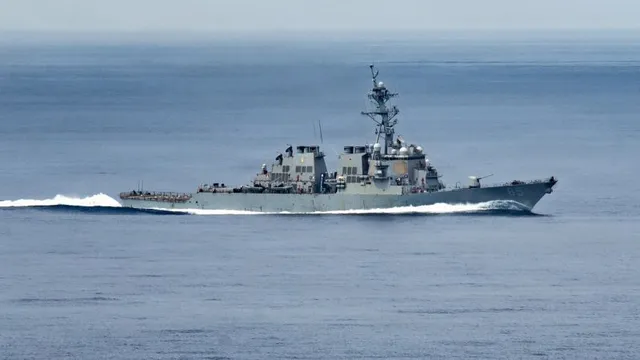
The USS Benfold, an Arleigh Burke-class guided-missile destroyer, experienced a significant engineering failure on July 24 while conducting routine operations in the Indo-Pacific region. The incident, which involved a casualty with the ship's generators, resulted in a complete loss of power that lasted for four days. During this period, the crew endured harsh conditions in the South China Sea's blistering heat without essential services such as working toilets, galley services for meal preparation, and air conditioning. The US 7th Fleet confirmed the incident in a statement, noting that no injuries occurred among the crew, who were praised for their resilience, grit, professionalism, and unwavering steadiness in their response. The cause of the power outage remains under investigation.
The operational impact of the power loss was immediate and severe. The USS Benfold was left adrift, requiring assistance from other vessels in the region. The guided-missile cruiser USS Robert Smalls provided cooked meals to the Benfold's crew during the outage, while other ships from the Japan-based USS George Washington Carrier Strike Group also rendered aid. After four days without power, the Benfold had to be towed to Subic Bay in the Philippines for repairs. The Navy reported that the necessary repairs were completed by August 8, and the ship subsequently returned to duty. This incident marks the second time in recent months that a US Navy destroyer in the Pacific Command's area of responsibility has suffered a loss of power, following a similar engineering casualty aboard the USS Higgins in May, which lost power and propulsion for several hours in the Indo-Pacific region.
The incident aboard the USS Benfold has drawn attention to broader concerns about the operational strain on the US Navy. The service is facing increased scrutiny over issues of low morale and mental health, particularly highlighted by the experience of the USS Abraham Lincoln in the Middle East, which endured more than 200 days without a port call during operations against Iran. Analysts and Democratic lawmakers have voiced concerns that the demands of the Iran conflict and the Navy's extensive global commitments are stretching the fleet thin. The USS George Washington Carrier Strike Group, which assisted the Benfold, is itself en route to the Middle East to relieve the Lincoln and its group, though the Navy did not confirm whether the Benfold would join that deployment to the waters off Iran.
Former US Navy Captain Carl Schuster provided insight into the stressful conditions aboard a powerless warship, drawing from his own experience of a similar, though much shorter, incident near Puerto Rico. He described a scenario where the operations officers would be concerned with crew morale and operational matters, engineers would be intensely focused on solving the technical problem, and the navigator would be worried about the ship's drift and incoming weather. The commanding officer and executive officer would bear the weight of all these concerns while also awaiting assistance. The crew's immediate worries would center on weather, food, and the uncertainty of what would come next. The Benfold's four-day ordeal underscores the critical nature of engineering reliability for naval operations and the human toll exacted when such systems fail in challenging maritime environments.

Comprehensive report
Full story,
in detail.
Trace the developments that led here, see how the story evolved, and understand the forces and wider context surrounding it.