
Topic overview
Briefly
- The tree suffered significant soil compaction from ropes hung on branches for children's play.
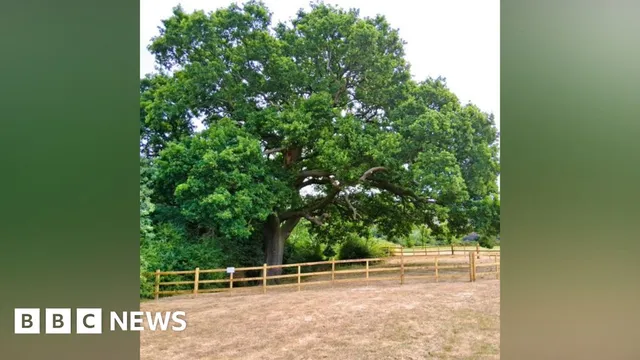
- New wooden fencing was installed to limit public access and improve the rooting environment.
- The oak is at least 200 years old and supports up to 2,300 different species.
What happened
In Manthorpe, near Grantham, Lincolnshire, a historic oak tree believed to date back to the era of Sir Isaac Newton has been given new protections by the local authority. South Kesteven District Council has erected wooden fencing around the ancient tree to restrict public access after it suffered significant soil compaction. The damage was reportedly caused by ropes being hung from its branches for children to play, which compacted the earth around the roots and threatened the tree's long-term health. The council described the action as a "minimal intervention" designed to deliver maximum benefits for wildlife and to conserve the oak for future generations. Councillor Rhys Baker, cabinet member for environment, noted that the tree is one of the area's most notable and is recorded on the Woodland Trust's Ancient Tree Inventory. He stated that restricting access would improve the rooting environment and help conserve this historic feature.
Dr Kate Lewthwaite, citizen science manager at the Woodland Trust, provided historical context for the tree's significance. She explained that a historic map of Grantham records the oak being in place from the 1800s, confirming it is at least 200 years old and probably closer to 300 years old, as it would have needed to be of a significant size to be mapped at that time. The protective measures, she said, make it more likely the tree will continue to grow to "a great age" and remain in good condition. The Woodland Trust also highlighted the ecological importance of native oak trees, which are known to support up to 2,300 different species, with 326 of these fully dependent on oak for survival. This underscores the broader environmental value of preserving such ancient specimens beyond their historical interest.
The tree's connection to Sir Isaac Newton adds a layer of cultural and scientific heritage to the conservation effort. Newton lived nearby at Woolsthorpe Manor, and it is famously claimed that while in the garden there he observed an apple falling from a tree, an event that led him to formulate the theory of gravity, which he later described in his 1687 book Principia. While the Manthorpe oak is not the specific apple tree associated with that story, its existence during Newton's lifetime links it to a pivotal period in scientific history. The council's intervention aims to ensure that this living link to the past is not lost to modern recreational pressures.
The decision to fence off the tree reflects a growing recognition of the need to balance public enjoyment with conservation. Soil compaction from foot traffic and play activities can suffocate tree roots, reducing their ability to absorb water and nutrients, and ultimately leading to decline. By limiting access, the council is addressing the immediate cause of the damage while also creating a safer environment for the public. The move aligns with broader efforts by organizations like the Woodland Trust to identify and protect ancient trees across the United Kingdom, which are irreplaceable habitats and historical monuments. The fencing is a practical step to ensure that this particular oak, which has stood for centuries, can survive for many more.

Comprehensive report
Full story,
in detail.
Trace the developments that led here, see how the story evolved, and understand the forces and wider context surrounding it.