
Topic overview
Briefly
- Europe is facing extreme heat and wildfires, particularly affecting Spain and France.
- The economic impact is severe, with losses exceeding $5 billion from wildfires and reduced grain crops.
- This situation highlights the urgent need for action against climate change as Europe adapts to a new normal.
What happened
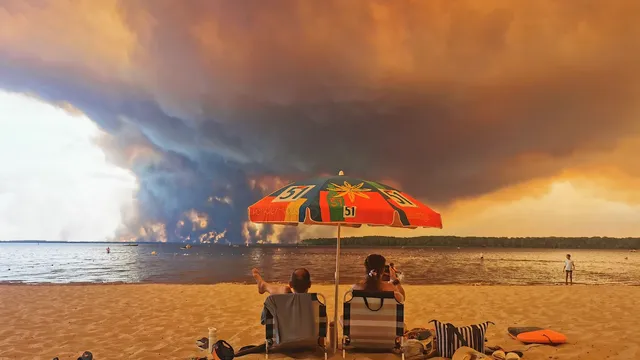
This summer, Europe has been grappling with unprecedented heat and wildfires, particularly affecting countries like Spain and France. The extreme weather has resulted in significant economic losses, with wildfires alone costing over $3 billion and a heat wave in June estimated to have reduced the continent's grain crop by more than $2 billion. The situation has been exacerbated by a lack of water, leading authorities to resort to extreme measures such as detonating explosives at riverbeds to redirect cooling water to nuclear reactors. As the continent faces the harsh realities of climate change, officials have declared it a national security emergency, highlighting the urgent need for action.
The consequences of this summer's extreme weather are far-reaching. The wildfires have not only destroyed vast areas of land but have also displaced hundreds of thousands of people. The heat has caused infrastructure failures, such as melted asphalt on train tracks in Germany, disrupting public transportation. Additionally, the drying up of vital waterways has threatened shipping, with water levels in the Rhine reaching their lowest since 1880, leading to increased transportation costs and delays in goods delivery. This situation underscores the vulnerability of Europe's energy system, particularly nuclear power, which relies on river water for cooling.
Climate scientists have pointed out that the last 11 years have been the hottest on record, with ocean surface temperatures also at unprecedented highs. The Arctic, traditionally known for its cold climate, has been experiencing temperatures above 90 degrees. These alarming trends are attributed to climate change driven by human activity and the burning of fossil fuels, which have intensified the conditions leading to wildfires and drought across Europe. Experts warn that without significant action, the continent will continue to face even worse consequences in the future.
As Europe navigates this new normal, the lack of adequate infrastructure to cope with extreme weather events has become evident. Many systems were designed for a climate that no longer exists, leaving the continent ill-prepared for the challenges posed by climate change. The current situation serves as a wake-up call for Europe, prompting discussions about the need for resilience and adaptation strategies to mitigate the impacts of future climate-related disasters.

Comprehensive report
Full story,
in detail.
Trace the developments that led here, see how the story evolved, and understand the forces and wider context surrounding it.