
Topic overview
Briefly
- More than 10 million civilian guns exist in Thailand, 4 million unlicensed
- A government scheme since 2009 let officials buy discounted guns, importing 200,000 yearly
- Indonesia has only 82,000 civilian guns despite having four times Thailand's population
What happened
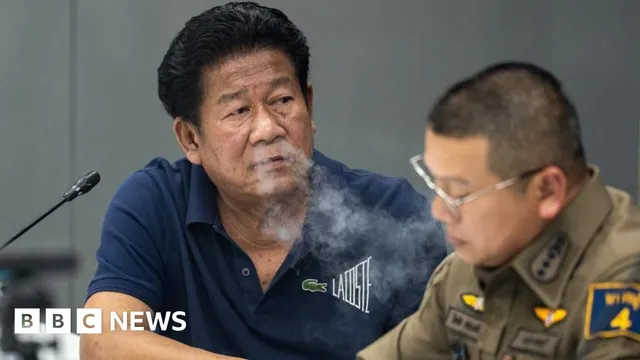
Thailand is grappling with a deeply entrenched gun culture that has resulted in more than 10 million civilian-owned firearms circulating across the country. Of these, approximately 4 million are unlicensed, operating entirely outside any legal framework. The scale of this proliferation was starkly illustrated by two separate fatal shootings that occurred on a single day. In one incident, a man shot his friend during a confrontation after being intercepted by police and taken to a station, where he casually smoked a cigarette and told reporters he had not intended to kill his friend but fired when the driver also pulled a gun. On the same day in Prachinburi, east of Bangkok, a police sergeant shot his wife in the head while arguing with her as she drove their car to pick up their young son. These incidents are not isolated anomalies but rather symptoms of a society where guns are viewed as status symbols and where multiple pathways exist for civilians to acquire them.
Experts and observers point to a combination of cultural norms and systemic loopholes that have allowed the situation to spiral. Guns are widely perceived as symbols of strength and power, a perception reinforced by the visible authority of military figures. The legal process for obtaining a firearm requires a purchase permit followed by a separate possession permit, but enforcement is lax and there are no regulations governing how safely guns must be stored. Imported firearms, which make up the majority of weapons, are extremely expensive, yet a government scheme introduced in 2009 has allowed police officers and other officials to purchase guns at steeply discounted prices. Under this program, around 200,000 guns have been imported annually, mostly from the United States. This has not only armed state officials but also contributed to the broader saturation of weapons in Thai society.
The consequences of this widespread availability have been devastating and recurrent. In 2022, a former police officer massacred children and teachers at a nursery, and in 2023, a 14-year-old boy carried out a shooting at Bangkok's most popular shopping mall. Following each of these tragedies, Thai Prime Minister Anutin Charnvirakul, who previously served as interior minister, ordered immediate measures to tighten gun control. These included suspending the discount purchase scheme for officials and halting the issuance of all purchase licenses. However, similar orders were issued after the 2022 and 2023 massacres, raising questions about the durability and enforcement of such measures. The cyclical pattern of tragedy followed by temporary restrictions suggests that deeper structural reforms have not been implemented.
Comparisons with neighboring countries underscore the abnormality of Thailand's situation. Indonesia, with a population four times larger than Thailand's, has only 82,000 civilian-owned guns. The disparity highlights how Thailand's regulatory environment and cultural attitudes have created a unique crisis. Businessman Yod, who owns a collection of more than 70 guns, described them as luxurious toys and admitted he had never fired most of them, illustrating how firearms are often acquired for prestige rather than practical use. Meanwhile, law enforcement acknowledges that most gun crimes are committed with illegal weapons, including blank guns and spare parts that can be legally imported and then assembled into functioning firearms. One individual reportedly held permits for nine guns at one time before reducing his collection to just one. The combination of legal loopholes, cultural glorification of firearms, and inconsistent enforcement continues to fuel a cycle of violence that the government has yet to break.

Comprehensive report
Full story,
in detail.
Trace the developments that led here, see how the story evolved, and understand the forces and wider context surrounding it.