
Topic overview
Briefly
- The 2026 total solar eclipse took place in central Spain, where it was observed by many.
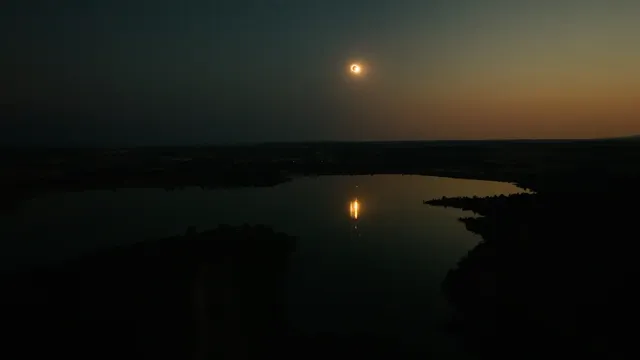
- Lucie McCormick utilized a drone to capture stunning images and videos of the eclipse.
- The time-lapse video created from the drone footage allows viewers to experience the eclipse's beauty.
What happened
In central Spain, the 2026 total solar eclipse occurred, captivating viewers with its breathtaking display. Lucie McCormick, a contributor to Scientific American and an avid eclipse chaser, documented this celestial event using both drone technology and ground-based cameras. The eclipse showcased a dramatic moment when the moon passed directly in front of the sun, resulting in a period of totality that lasted just over a minute. During this brief yet awe-inspiring moment, the landscape was enveloped in darkness, with only a halo of orange light visible in the sky. McCormick's drone footage allowed for a unique perspective, capturing the eclipse's progression from start to finish. The resulting time-lapse video serves as a remarkable visual record of the event, allowing viewers to relive the experience long after the eclipse has passed. This innovative approach to documenting such a rare astronomical phenomenon highlights the intersection of technology and natural wonders, emphasizing the importance of scientific exploration and storytelling in understanding our universe.

Comprehensive report
Full story,
in detail.
Trace the developments that led here, see how the story evolved, and understand the forces and wider context surrounding it.