
Topic overview
Briefly
- Myanmar verified 308,797 Rohingya refugees as former Rakhine residents, out of 426,545 checked.
- The government will accept their return once security in Rakhine improves, but no timeline given.
- Previous repatriation attempts failed due to conflict and lack of trust; many refugees still in lim.
What happened
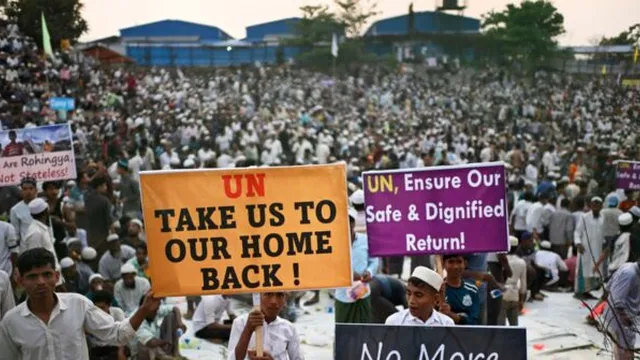
The Rohingya refugee crisis, now in its ninth year, remains unresolved as Myanmar's military-backed government announced on Saturday that it has verified more than 300,000 Rohingya refugees in Bangladesh as former residents of Rakhine state and will accept their return once security conditions improve. The announcement came from the Ministry of Foreign Affairs, which stated that as of the end of July, Myanmar had verified 426,545 of the 828,824 refugees on a list provided by Bangladesh, determining that 308,797 of those were former Rakhine residents. The ministry also said that 113,507 people could not be verified and that 4,241 were found to have been involved in what it called terrorist activities. The statement emphasized that Myanmar will continue working with Bangladesh to receive verified former residents when the security situation in Rakhine becomes more stable.
The crisis began in August 2017 when Myanmar's military launched a crackdown in Rakhine state following attacks by a Rohingya insurgent group on guard posts. The operation drove more than 700,000 Rohingya across the border into Bangladesh, joining hundreds of thousands of others who had fled earlier waves of violence. The scale and ferocity of the operation led to accusations of ethnic cleansing and genocide from the international community, including the United Nations. Myanmar does not recognize the Rohingya as one of the country's 135 lawful ethnic minorities, instead referring to them as Bengalis to imply they are illegal settlers from Bangladesh.
Efforts to repatriate the refugees have repeatedly failed. In 2018, Myanmar and Bangladesh agreed to a two-year repatriation process, but the security situation in Myanmar worsened after the military takeover in 2021 that ousted the elected government of Aung San Suu Kyi, triggering widespread armed resistance. The renewed chaos brought about by fighting between the Rakhine-based ethnic Arakan Army group and the military over control of the region in 2023 forced more refugees to flee toward Bangladesh and elsewhere. The Arakan Army now controls much of Rakhine after capturing territory from the military in recent years.
In recent years, poor conditions in refugee camps, steep cuts to foreign aid, and the lack of safe prospects for returning to Myanmar have led to an increasing number of Rohingya refugees attempting dangerous ocean crossings to Malaysia and Indonesia on rickety boats. Malaysian Prime Minister Anwar Ibrahim said in late July that Myanmar had agreed to take back 5,000 Rohingya refugees currently living in Malaysia as part of a repatriation program. The latest verification announcement is seen as a step toward repatriation, but many challenges remain, including the ongoing conflict in Rakhine and the lack of trust between the Rohingya and the Myanmar government.

Comprehensive report
Full story,
in detail.
Trace the developments that led here, see how the story evolved, and understand the forces and wider context surrounding it.