
Topic overview
Briefly
- Lula addressed 60,000 striking metalworkers at Vila Euclides Stadium in 1979 without a sound system
- Brazil registered nearly 400 femicides in Q1 2026, the highest since tracking began 11 years ago
- Brazil's unionization rate fell from 15.7% in 2014 to 8.9% in 2024 as gig economy jobs surged
What happened
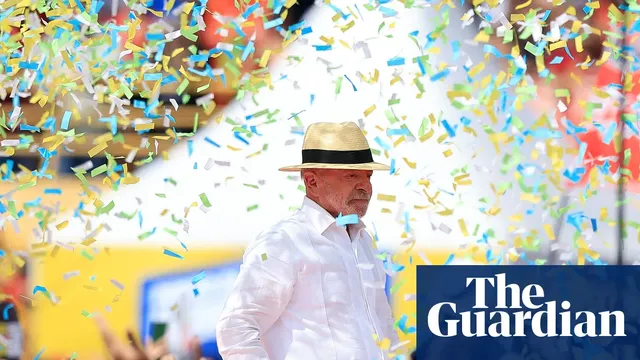
Brazil's presidential election campaign officially began on Sunday, August 16, 2026, with both main candidates holding rallies in their political strongholds. President Luiz Inácio Lula da Silva, now 80 years old, chose the Vila Euclides Stadium in São Bernardo do Campo, an industrial suburb of São Paulo, to launch his bid for a historic fourth nonconsecutive term. The location carries profound symbolic weight, as it was at this very stadium in 1979 that a 33-year-old Lula, then a bushy-bearded union leader, addressed approximately 60,000 striking metalworkers without a sound system, standing on a table to rally them against Brazil's military dictatorship. Those strikes, which took place in 1979 and 1980, are widely credited with helping to pave the way for Brazil's return to democracy in 1985 and launching Lula's extraordinary political career. On Sunday, around 20,000 supporters, many wearing the red associated with his Workers' Party, gathered to hear him speak. Lula used the occasion to warn against foreign interference in Brazil's elections, a clear reference to accusations from his allies that the United States government under Donald Trump is seeking to boost his opponent's campaign through measures such as raising tariffs on Brazilian exports and revoking the visa of Brazil's ambassador to Washington. He also declared that no foreign power would be allowed to exploit Brazil's vast reserves of rare minerals.
Meanwhile, Senator Flávio Bolsonaro, the 45-year-old son of jailed former President Jair Bolsonaro, launched his own campaign on Copacabana beach in Rio de Janeiro before thousands of supporters. His father, who was convicted and sentenced to 27 years in prison in 2025 for plotting a failed coup attempt following his 2022 election loss to Lula, is under house arrest and did not attend the rally. The younger Bolsonaro, who bears a physical resemblance to his father, sought to establish his own political identity, telling the crowd that while he may look like his father, it is difficult to compare Pelé's son with Pelé himself. He wore a bulletproof vest during his speech and vowed to fight crime and remove what he described as left-wing ideology from Brazilian schools. Flávio Bolsonaro also praised Trump's decision to classify Brazilian drug factions as terrorist organizations and positioned himself as the only candidate capable of negotiating with the United States. His party convention was attended by Argentina's President Javier Milei, and he has received expressions of support from Israeli Prime Minister Benjamin Netanyahu and several members of the Trump administration.
Both candidates made direct appeals to women voters, who constitute nearly 53 percent of Brazil's 158 million eligible voters. The issue of gender-based violence has become a central campaign theme, with Brazil registering nearly 400 femicides in the first quarter of 2026 alone, the highest number for that period since the country began tracking the crime 11 years ago. Lula, with First Lady Rosângela da Silva at his side, declared that men must learn from childhood that they are no better than women and promised to launch a platform within ten days detailing gender-responsive policies, including education initiatives and stronger laws to punish violence against women. He had previously stated during his party's convention in early August that men who commit domestic or gender-based violence must choose between supporting him or hitting a woman, declaring that if they choose violence, they do not need to vote for him. Flávio Bolsonaro, accompanied by his mother and wife, similarly promised to combat violence against women. The election, scheduled for October 4, 2026, is expected to be extremely tight, echoing the razor-thin margin by which Lula defeated Jair Bolsonaro in 2022.
A significant challenge for Lula's campaign is reconnecting with a new generation of workers in Brazil's growing gig economy. The country's unionization rate has nearly halved over the past decade, falling from 15.7 percent in 2014 to just 8.9 percent in 2024. Millions of app-based workers, mostly young men working for platforms like Uber and iFood, remain skeptical of government intervention and traditional labor organizing. A 2023 survey indicated that 40 percent of platform workers identify with the right, another 40 percent consider themselves centrist, and only 20 percent identify with the left. Many of these workers value the flexibility of gig work over the benefits of formal employment and fear that government regulation could limit their autonomy. The Workers' Party has attempted to address this by backing a shorter work week and proposing new protections for app-based workers, including regulations covering pay, working conditions, social security benefits, and platform algorithms. However, resistance from companies has largely stymied these efforts, and political analysts note that the party lacks a clear message for workers who do not have an identifiable boss. Lula acknowledged this challenge in his speech, stating that there has been a substantial change in the world of work and that his party needs to adapt its message to reach those outside formal, registered employment. The election is being viewed internationally as one of the most important electoral contests of the year, with some activists at Lula's rally distributing stickers reading "Fuck Trump" in response to perceived U.S. interference in Brazil's democratic process.

Comprehensive report
Full story,
in detail.
Trace the developments that led here, see how the story evolved, and understand the forces and wider context surrounding it.