
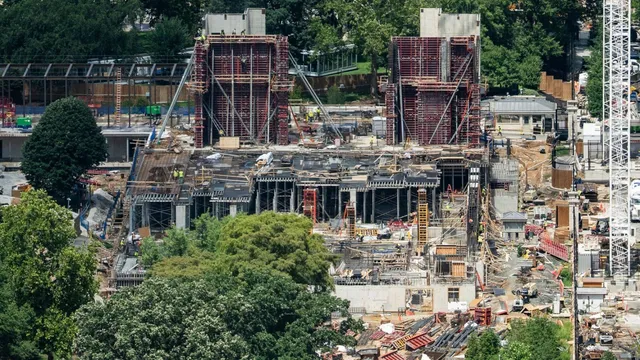
Topic overview
In brief
- A federal appeals court ruled that President Trump cannot build a new ballroom at the White House without congressional approval.
- The ruling was in response to a lawsuit filed by the National Trust for Historic Preservation after the East Wing was demolished.
- This decision highlights the limitations of presidential authority over federal property and may lead to an appeal to the Supreme Court.
Summary
In a significant legal ruling, a federal appeals court in the United States determined that President Donald Trump does not have the constitutional authority to unilaterally construct a new ballroom at the White House. This decision came after the National Trust for Historic Preservation filed a lawsuit against the Trump administration, challenging the legality of the demolition of the historic East Wing to make way for the proposed 90,000-square-foot ballroom. The court's ruling emphasized that any major alterations to federal property, including the White House, require congressional approval, highlighting the limits of presidential power in this context.
The appeals court's decision was a 2-1 ruling, which upheld a previous ruling by U.S. District Judge Richard Leon. Judge Leon had found that the Trump administration likely overstepped its authority by demolishing the East Wing without proper authorization from Congress. The court noted that the President is merely a temporary tenant of the White House and does not possess ownership rights over the property, which is intended for the use of all future Presidents and the American public.