
Topic overview
Briefly
- Steve Wyn-Harris discovered a meteorite in New Zealand after a fireball event.
- The meteorite was confirmed through tests with a fridge magnet, indicating its composition.
- This discovery marks the 11th confirmed meteorite in New Zealand, showcasing the importance of citizen science.
What happened
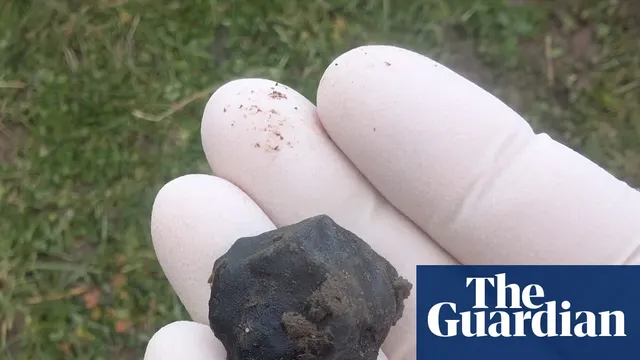
In New Zealand, a significant event unfolded when Steve Wyn-Harris, a citizen astronomer, discovered a small black stone believed to be a meteorite. This discovery occurred shortly after a massive fireball illuminated the skies over the North Island on July 28, 2026. Wyn-Harris, who is also the director of Fireballs Aotearoa, was part of a group that utilized a network of 200 cameras to track meteor showers and recover meteorites. After analyzing the stone with fellow scientists, it was confirmed to be a meteorite, marking the 11th confirmed meteorite found in New Zealand's history.
The meteorite was found near a riverbank while Wyn-Harris was scouting farmland, just a day before a planned search by his group. Initially uncertain about his find, he conducted a test with a fridge magnet during a video call with other citizen scientists and geologists. The test indicated the presence of iron and nickel, which are characteristic of meteorites, leading to excitement among the group. Over the following days, the search party recovered four fragments of the meteorite, totaling 75 grams, including one that landed on a residential driveway.
Geologists, including Dr. Marshall Palmer, will analyze the fragments further, and they will be officially named as New Zealand's 11th documented meteorite. The meteor's trajectory suggested it originated from the asteroid belt, classifying it as an ordinary chondrite. Professor James Scott, a geoscientist and founder of Fireballs Aotearoa, noted that these fragments likely share origins with New Zealand's first meteorite discovered in 1863, indicating a connection to the early solar system.
This discovery not only adds to New Zealand's meteorite collection but also highlights the collaborative efforts of citizen scientists and professionals in the field of astronomy. The use of technology, such as the extensive camera network, has proven invaluable in tracking and documenting meteor events, paving the way for future discoveries and research in the field of meteoritics.

Comprehensive report
Full story,
in detail.
Trace the developments that led here, see how the story evolved, and understand the forces and wider context surrounding it.