
Topic overview
Briefly
- N Chandrasekaran announced his resignation as chairman of Tata Sons after a six-month deadlock over his reappointment.
- The decision follows concerns raised by Tata Trusts regarding the performance of some group businesses.
- The leadership transition has led to a decline in shares of major Tata companies, highlighting investor concerns.
What happened
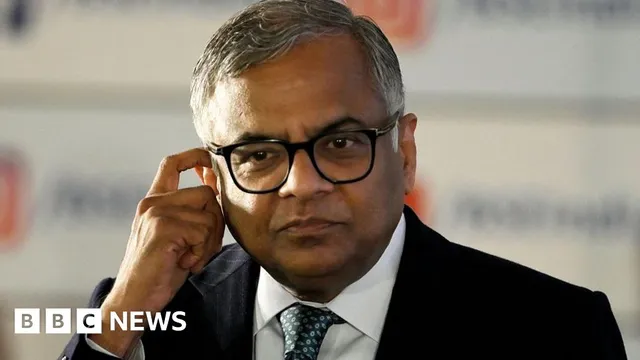
In India, N Chandrasekaran, the chairman of Tata Sons, announced his resignation ahead of the company's annual general meeting. This decision comes after a prolonged six-month deadlock regarding his proposed reappointment for a third term, which was set to be discussed at the meeting. Chandrasekaran, who has been with the Tata Group since 1987 and took over as chairman in February 2017, expressed gratitude for his time leading the organization. His resignation is significant as it reflects ongoing tensions within the Tata Trusts, which holds a majority stake in Tata Sons, and has raised concerns about the performance of certain group businesses.
The internal conflicts within the Tata Group have been exacerbated by disagreements among board members regarding governance issues, board nominations, and the potential public listing of Tata Sons. These disputes have created uncertainty at a time when the group is facing various business challenges, including the revival of Air India, which was acquired from the Indian government in 2022. The lack of unanimous support for Chandrasekaran's extension proposal led to his decision to step down, emphasizing the need for clarity in leadership for the benefit of employees, investors, and stakeholders.
Chandrasekaran's departure has already impacted the stock market, with shares of major Tata companies experiencing declines as investors reacted to the leadership transition. The Tata Group, known for its diverse portfolio ranging from steel to IT services, is now tasked with finding a suitable successor to lead the organization beyond February 2027. The next leader is expected to be chosen from within the group, as analysts suggest that continuity in leadership is crucial for maintaining stability during this transitional period.
As the Tata Group navigates this leadership change, the focus will be on addressing the internal rifts and ensuring that strategic projects continue to progress. The future direction of Tata Sons remains uncertain, and stakeholders will be closely monitoring the developments in the coming months as the board seeks to resolve the leadership question and restore confidence in the group's governance.

Comprehensive report
Full story,
in detail.
Trace the developments that led here, see how the story evolved, and understand the forces and wider context surrounding it.