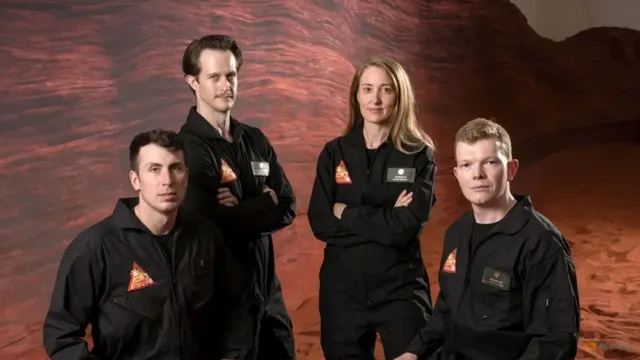
NASA's second simulated Mars mission crew completes 378-day isolation in Houston

technology space North America

On October 31, 2026, four NASA crew members emerged from a 378-day simulated Mars mission at the Johnson Space Center in Houston, Texas. The crew, including medical officer Ellen Ellis, commander Ross Elder, science officer Matthew Montgomery, and flight engineer James Spicer, lived in a 1,700-square-foot 3D-printed habitat since October 19, 2025. They performed tasks like growing crops in simulated Martian soil and dealt with communication delays. NASA aims for a human Mars mission in the 2030s, with a lunar return planned earlier. The crew will undergo two weeks of post-mission evaluations.

NASA's second simulated Mars mission crew completes 378-day isolation in Houston
Updated Nov 2, 2026 First reported Nov 1, 2026

Comprehensive report

Full context,
in detail

An in-depth guide to the preceding events, driving forces, and broader environment shaping this story.

Your input is required

Help us and others understand what happened and how to think about it. Make your voice heard. Don’t leave it to biased media or AI!

Evaluate the facts, judge events, and assess the actions of those involved—who deserves praise and who is to blame? What do you think will happen next? Your point of view will be linked to this story and all future related news stories that involve the same people and organizations.

No opinions yet

Be the first to tell us what we should learn from this story.