
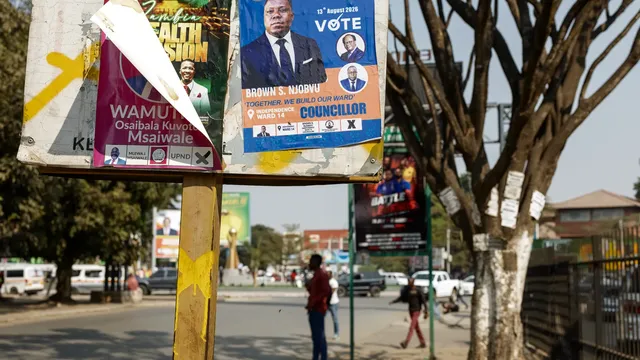
Topic overview
Briefly
- Approximately 8.79 million voters are registered for the upcoming election in Zambia.
- Hakainde Hichilema is seeking re-election amid concerns over economic hardship and living conditions.
- The election outcome will likely depend on voters' perceptions of the government's economic performance.
What happened
Zambia is preparing for a significant election as approximately 8.79 million voters are registered to participate. The election features fourteen candidates vying for the presidency, with Hakainde Hichilema, the leader of the governing United Party for National Development (UPND), seeking a second term. His main opponent is Brian Mundubile, the presidential candidate of the opposition Tonse Alliance. Key issues influencing the election include economic hardship, debt restructuring, inflation, and copper revenues, which are critical to the country's economy.
Hichilema's government has made strides in economic reforms, including debt restructuring and the completion of an IMF-supported program. However, analysts suggest that voters are increasingly concerned about whether these reforms have led to tangible improvements in household incomes and living conditions. Despite the government's claims of progress, many citizens continue to face high costs for food, fuel, and electricity, which are pressing issues for the electorate.
Political analysts emphasize that the election will likely be shaped by the disparity between macroeconomic recovery and the everyday experiences of ordinary citizens. While the government can highlight achievements such as restored international credibility and free education, voters are more likely to judge its performance based on practical concerns like food and transport costs, employment opportunities, and the reliability of public services.
Economic hardship remains a significant concern, particularly for the 60 percent of the population living below the national poverty line. Political parties are urged to focus on these citizens, who have high expectations for government action to improve their lives. The mining sector, particularly copper, is another critical issue, as it accounts for a substantial portion of Zambia's export earnings and GDP. The next president will face pressure to ensure that increased revenues from mining benefit the broader population.

Comprehensive report
Full story,
in detail.
Trace the developments that led here, see how the story evolved, and understand the forces and wider context surrounding it.