
Topic overview
Briefly
- Iran claims Qatar captured three pilots after their jets were shot down in March.
- Qatar denies the claims, saying it recovered remains of one pilot and invited Iran to review.
- The dispute adds tension amid stalled U.S.-Iran talks and regional conflicts.
What happened
On August 15, 2026, Iran's military publicly accused Qatar of holding three of its pilots captive since March 2, 2026, when their Su-24 bombers were shot down during a mission against Al Udeid Air Base, a major U.S. facility in Qatar. The accusation came in a letter from Brig Gen Mohammad Bagherzadeh to the International Committee of the Red Cross (ICRC), in which he identified the pilots as Javad Salehi, Abdolmajid Dashtian, and Omran Behraveshian. He stated that the pilots had ejected and were captured alive by Qatari forces, but had been held incommunicado for six months, denied contact with families or diplomatic representatives, and their rights under the Geneva Conventions violated. The letter also mentioned a fourth pilot, Majid Kazemi, who was killed in the same operation, and whose remains were reportedly returned to Iran.
Qatar's Foreign Ministry spokesperson, Majed Al Ansari, categorically denied the allegations, calling them "misleading statements" and expressing surprise given ongoing diplomatic efforts to de-escalate regional tensions. Al Ansari confirmed that Qatari air defenses had shot down the Iranian aircraft after they violated Qatari airspace, and that search and rescue teams had recovered the remains of one pilot, coordinating with Iran for repatriation. He also stated that Qatar had invited Iranian officials in April to review the search and rescue details, but received no response. The denial was echoed in a statement on X, where Al Ansari emphasized that Qatar was not holding any surviving aircrew.
The incident occurred against the backdrop of the broader U.S.-Iran war that began on February 28, 2026, with joint U.S.-Israeli strikes on Iran. The Iranian mission to strike Al Udeid Air Base was a retaliatory action. This was the first time a Gulf country reported downing Iranian aircraft during the conflict. The war had seen a ceasefire in April, brokered with Pakistan's mediation, but peace talks collapsed in June, leading to renewed clashes near the Strait of Hormuz and attacks on shipping. The dispute over the pilots adds another layer of tension, even as Qatar continues to act as a mediator between Iran and the U.S. A 60-day negotiating window under a mid-June memorandum of understanding was set to expire on August 17, 2026, with few direct talks having occurred.
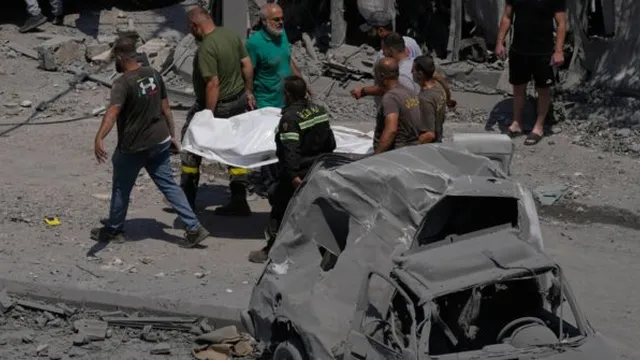
In a related development, the Iran-backed Houthis in Yemen attacked the Red Sea port of Mokha on August 14, killing at least three people, including two marines, and suspending port operations. This was part of an escalation threatening to reignite Yemen's civil war. Additionally, Israeli airstrikes on southern Lebanon on August 15 killed at least 11 people, including three children, in one of the deadliest incidents since a shaky truce with Hezbollah took effect on June 20. Israel claimed the strike targeted a Hezbollah battalion commander, who allegedly used his family as human shields. The U.S. also threatened an "indefinite" blockade against Iran, and President Trump suggested declaring the Strait of Hormuz a U.S. territory, which Iran rejected. The situation remains volatile, with the pilot dispute adding to the complex web of regional conflicts.

Comprehensive report
Full story,
in detail.
Trace the developments that led here, see how the story evolved, and understand the forces and wider context surrounding it.