
Topic overview
Briefly
- A federal judge in Boston expanded a block on President Trump's executive order regarding mail-in voting.
- The ruling prevents the U.S. Postal Service from enforcing directives related to mail-in ballots nationwide.
- This decision is seen as a significant victory for voting rights advocates ahead of the midterm elections.
What happened
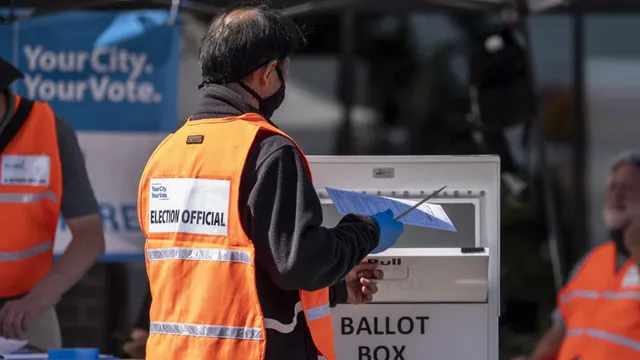
In the United States, on August 11, 2026, a federal judge in Boston expanded a previous ruling that blocked President Donald Trump's executive order aimed at tightening mail-in voting rules. U.S. District Judge Indira Talwani's latest decision prevents the U.S. Postal Service (USPS) from enforcing directives related to mail-in voting across the entire nation, rather than just in the 23 states and Washington, D.C. that were previously affected. The judge's ruling came in response to concerns raised by voting rights groups, who argued that Trump's order overstepped presidential authority and created confusion among voters.
The executive order had directed the Department of Homeland Security to compile lists of voting-age U.S. citizens and required the USPS to establish new standards for mail-in and absentee ballots. Judge Talwani found that the plaintiffs were likely to succeed in their lawsuit, which claimed that the order violated constitutional provisions regarding state control over elections. The judge's ruling emphasized that there was no evidence to support claims of widespread illegal voting by non-citizens, which was one of the justifications for the executive order.
This legal battle over mail-in voting comes as the nation prepares for the upcoming midterm elections, which are critical for determining control of Congress. The Trump administration is expected to appeal the ruling, which has been praised by voting rights advocates as a significant victory for those who rely on mail-in voting. The League of Women Voters of Massachusetts expressed their support for the ruling, highlighting the importance of protecting voting rights for all citizens, especially those who depend on mail-in ballots.
The ongoing legal challenges reflect broader tensions surrounding voting rights and election integrity in the United States. As the Trump administration continues to push for stricter voting regulations, the judiciary has become a battleground for these issues. The outcome of this case could have lasting implications for how elections are conducted in the future, particularly in the context of mail-in voting, which has become increasingly important in recent years due to the COVID-19 pandemic and changing voter preferences.

Comprehensive report
Full story,
in detail.
Trace the developments that led here, see how the story evolved, and understand the forces and wider context surrounding it.