
Topic overview
Briefly
- Humans have continuously occupied the International Space Station for 26 years.
- Taylor believes humanoid robots cannot fully replace human workers on the moon.
- Taylor sees Mars as a backup plan for humanity, not a new primary home.
What happened
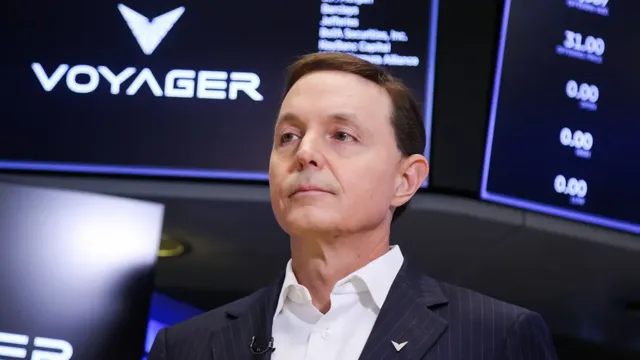
Billionaire space entrepreneur Dylan Taylor has outlined a bold vision for humanity's future in space, predicting that people will be living and working on the moon by the early 2030s. Taylor, the founder of Voyager Technologies, shared his predictions in an exclusive interview with Fortune, joining a chorus of high-profile tech leaders including Elon Musk, Jeff Bezos, and Sam Altman who have made similar forecasts about humanity's expansion beyond Earth. Taylor's company went public on the New York Stock Exchange last year, reaching a valuation of $3.8 billion and cementing his status as a billionaire at age 53. His personal experience with space travel includes a 2021 flight aboard Blue Origin, which made him the 606th human to reach space.
Taylor's predictions are grounded in both current realities and future ambitions. He noted that a small number of humans are already working in space at the International Space Station, which has maintained continuous human presence for 26 years. The industry is now actively working to scale up from a handful of trained astronauts to the general population. Taylor envisions a moon base where people will live and work, suggesting that observers on Earth will be able to look up and see artificial lights on the lunar surface. This represents a significant expansion from current space activities, which are limited to government-trained astronauts and a small number of wealthy private citizens who have made brief suborbital flights.
The practical applications of a lunar presence extend beyond mere habitation, according to Taylor. He identified several key industries that would drive human work on the moon, including resource mining, construction of orbital data centers, and power grid development. Taylor expressed skepticism that humanoid robots, such as Tesla's Optimus, could fully replace human workers in these complex tasks. He argued that programming robots to handle every contingency on the lunar surface would be impossible, necessitating human presence to solve problems and adapt to unforeseen challenges. This perspective contrasts with some automation-focused visions of space development, emphasizing the irreplaceable role of human ingenuity and adaptability in extraterrestrial environments.
While Taylor is enthusiastic about lunar development, he draws a clear distinction between the moon and Mars in terms of their roles in humanity's future. He agrees with Elon Musk that humanity needs diversification beyond Earth to protect against existential threats such as asteroid impacts, but he does not view the moon as sufficient for this purpose. Mars, in Taylor's view, represents humanity's backup plan rather than a new primary home. He acknowledged that many people would not want to live on Mars, though he personally would. Taylor believes that enough individuals possess what he calls the adventurer gene to establish a small colony on the Red Planet, but he cautioned that creating an entire civilization through terraforming would take an extremely long time. This measured assessment tempers some of the more ambitious timelines proposed by other space visionaries while still affirming the long-term potential for human settlement on Mars.

Comprehensive report
Full story,
in detail.
Trace the developments that led here, see how the story evolved, and understand the forces and wider context surrounding it.