
Topic overview
In brief
- The SpaceX Falcon 9 rocket is on a collision course with the Moon, expected to create a visible debris plume.
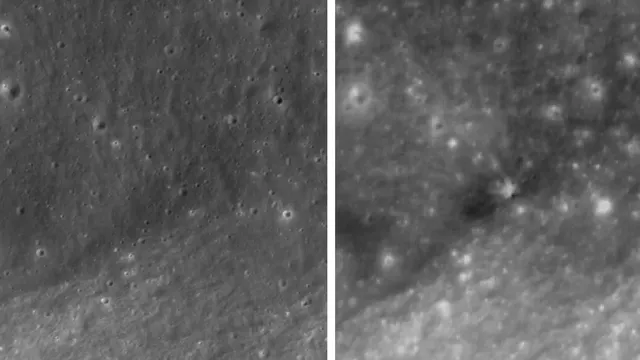
- The Korea Aerospace Research Institute has released images of the crater left by the rocket's impact.
- The increasing risk of debris hitting the Moon highlights the need for better space policies as the space race intensifies.
Summary
In recent days, the SpaceX Falcon 9 rocket has been on a collision course with the Moon, raising concerns about the increasing risk of debris impacting lunar surfaces. The Korea Aerospace Research Institute has shared images showing the crater left by the rocket's impact, which is relatively small in size. This event is part of a broader trend as the space race intensifies, leading to a higher likelihood of more debris hitting the Moon. Astronomers are closely monitoring the situation, as the impact is expected to create a plume of debris that could be visible from Earth through telescopes.
The implications of this event extend beyond just the immediate impact. As more private companies and nations engage in lunar exploration and activities, the potential for space debris increases significantly. The Moon, once considered a pristine celestial body, is now at risk of becoming cluttered with remnants of human activity. This situation poses challenges for future lunar missions, including the establishment of bases and other long-term projects.