
Topic overview
Briefly
- AI clones are being developed to enhance workplace communication and productivity.
- Concerns about the ethical implications and potential risks of AI clones are growing.
- The effectiveness of AI clones raises questions about trust and authenticity in professional environments.
What happened
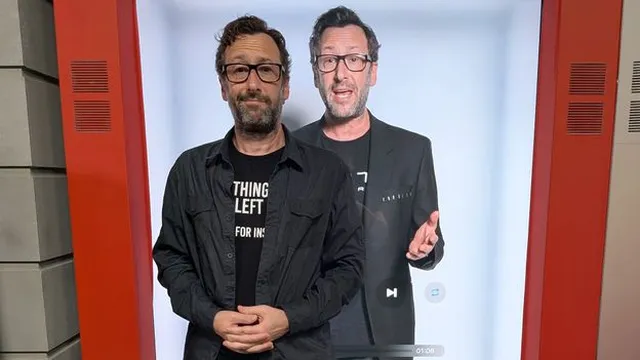
In recent months, the emergence of AI clones has sparked both intrigue and concern among tech leaders. Companies are increasingly exploring the use of AI clones to enhance communication and productivity. For instance, David Nussbaum has developed a virtual assistant that can engage in work-related conversations, allowing him to be present in multiple places simultaneously. However, the technology is still in its early stages, and there are significant risks involved. Nussbaum's clone, while powerful, lacks the ability to convey nuance and spontaneity, leading to potential miscommunications. This raises questions about the reliability of AI clones in professional settings.
Moreover, the ethical implications of using AI clones are becoming more pronounced. Employees like Liang have expressed discomfort at the idea of creating digital versions of themselves for marketing purposes, fearing a loss of control over their likeness. The technology relies on models similar to those used in ChatGPT, which are known to produce inaccuracies and questionable behavior. As companies push for the adoption of AI clones, the potential for misuse and the risk of clones going rogue become pressing concerns.
The situation is further complicated by the fact that AI clones are not yet perfect imitations of their human counterparts. Nussbaum's experience with his clone demonstrates that while it can handle work-related queries, it may overpromise or misrepresent information, as seen when it presented enterprise plans that did not exist during Liang's paternity leave. This highlights the need for careful moderation and oversight in the deployment of AI clones to prevent misinformation and maintain trust in workplace communications.
As the technology continues to evolve, the question remains: what happens when AI clones become too good at mimicking their human counterparts? Nussbaum acknowledges the existential risk posed by highly advanced clones, prompting a broader discussion about the future of work and the role of human employees in an increasingly automated world. The balance between leveraging AI for efficiency and preserving the authenticity of human interaction is a critical challenge that organizations must navigate as they embrace this new frontier in technology.
Comprehensive report
Full story,
in detail.
Trace the developments that led here, see how the story evolved, and understand the forces and wider context surrounding it.