
Topic overview
Briefly
- Meta filed a patent for facial recognition smart glasses in February 2026.
- Privacy advocates criticized the patent, citing risks to stalking and domestic violence victims.
- Meta previously faced backlash for distributing facial recognition code in its Meta AI app.
What happened
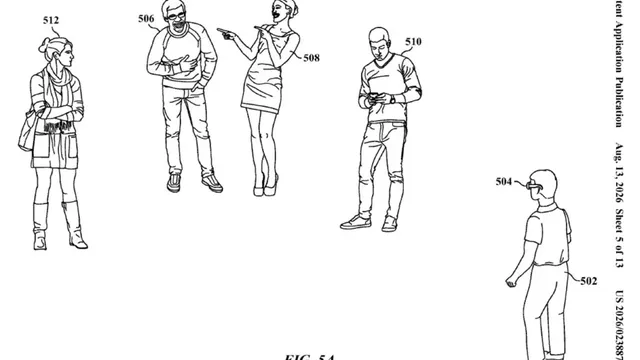
Meta has filed a patent application with the US Patent and Trademark Office for a system that would integrate facial recognition technology into its smart glasses. The application, submitted in February 2026 and made public this week, includes 44 pages of detailed drawings and descriptions. The system would use AI-powered facial recognition to identify individuals and then create media files, such as videos, that incorporate that identification. It could also leverage additional inputs like location data or information from online services to enhance the media creation process, support a wide range of content-creation activities, and interact with Meta's various services.
The patent filing comes at a time when Meta's smart glasses have already faced significant criticism from privacy advocates. The company has been accused of lacking adequate privacy protections, and the glasses have been dubbed "pervert glasses" in some media coverage. This latest development has intensified concerns, with the nonprofit Center for Democracy and Technology issuing a statement calling the patent application an escalation of privacy harms. Ariana Aboulafia, a project lead at the center, warned that while the patent describes relatively innocuous use cases, the technology could be deployed for far more nefarious purposes, putting marginalized individuals such as victims of stalking and domestic violence at risk. She emphasized that no one should have to constantly question whether the person next to them is recording, identifying, and storing information about them.
Meta has previously faced backlash for its handling of facial recognition technology. The company distributed dormant facial-recognition code within its Meta AI app, a move it later reversed by removing the software entirely. It also faced criticism for testing facial recognition software from a vendor that deals with military and police contracts. These issues were brought to light by an investigation from Wired, which was confirmed by the Electronic Frontier Foundation's Threat Lab, revealing hidden code distributed to all Meta AI app users. The findings put Meta on the defensive, and the company lashed out at Wired for its coverage even as it rolled back the software.
The patent application does not guarantee that the technology will be implemented, and there is no indication of how long the approval process might take or whether the patent will ultimately be granted. A representative for Meta did not immediately respond to a request for comment. The filing reflects Meta's continued investment in augmented reality and smart glasses, but it also underscores the ongoing tension between innovation and privacy concerns in the tech industry.

Comprehensive report
Full story,
in detail.
Trace the developments that led here, see how the story evolved, and understand the forces and wider context surrounding it.