
Topic overview
Briefly
- Gary Stewart's 1975 debut album Out of Hand won critical acclaim and a number one country single.
- Stewart died in December 2003 at age 59 with his passing barely noticed by the public.
- A biography and demo collection released decades later sparked renewed interest in his music.
What happened
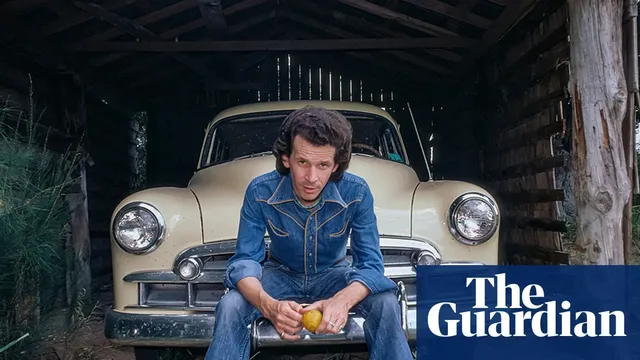
Gary Stewart, born in Kentucky in 1944 as one of twelve children, moved with his family to Florida in 1956 after his coal miner father suffered a debilitating work injury. His musical career reached its commercial peak in the mid-1970s when his debut album Out of Hand earned critical acclaim and the single She's Actin' Single (I'm Drinkin' Doubles) topped the country charts in 1975. Over the next three years, Stewart released a string of albums including Steppin' Out, Your Place or Mine, and Little Junior, which are now regarded as some of the most exciting American music of that decade. As a vocalist, Stewart displayed remarkable range, delivering ballads like Quits and Ten Years of This with intense emotional eloquence while attacking rockers like Little Junior and Your Place or Mine with the gusto of a man hungry for the wild side of life. Despite this artistic success, Stewart remained a ghostlike figure in the music industry, and his death in December 2003 at age 59 barely registered in the public consciousness.
The personal life of Gary Stewart was marked by profound chaos and addiction that his daughter Shannon Ashburn describes as normalized within their family. Stewart met Mary Lou Taylor when he was sixteen and she was twenty-one, beginning a lifelong relationship that Ashburn characterizes as utterly codependent, saying one could not live without the other. The household was defined by drug addiction, with Ashburn recalling an incident when she was only twelve years old and had to drive her mother to the hospital after an overdose while her father was on tour. Stewart's own descent into substance abuse was reportedly triggered by a prescription following a car crash in which he broke his leg, with Ashburn noting that doctors at the time did not understand how addictive the medication would become. Having been raised by addicts and later enduring her own struggles with dependency, Ashburn has now dedicated herself to helping others who are dependent on drugs.
The posthumous rediscovery of Gary Stewart has been driven by multiple cultural forces converging years after his overlooked death. A biography titled Gary Stewart: I Am from the Honky Tonks, published in November of the previous year, became an unexpected critical and commercial success in the United States despite being the most difficult of the author's books to find a publisher for. The reissue label Delmore Recording Society has released One Track Mind, a collection of Stewart's early-1970s demos that offers listeners a mesmerising glimpse into his formative work. A new generation of country and indie-rock performers including Ella Langley, Zach Top, Wednesday frontwoman Karly Hartzman, Charley Crockett, and Ryan Davis and the Roadhouse Band have begun singing Stewart's praises and covering his songs. Davis has compared Stewart to a natural disaster from an earlier time, the kind that older folks still talk about outside the bait shop, while noting that Stewart's geographic origins made him simultaneously more real and yet somehow more fantastical.
Bob Dylan's assessment of Gary Stewart cuts to the heart of what makes the singer's work so unsettling and enduring. Dylan observed that there is a cracked truth in Stewart's voice and that what is most disturbing about him is that he sounds like he is already living in the aftermath. This quality of singing from a place beyond the immediate experience, from the wreckage rather than the moment of impact, distinguishes Stewart from other honky-tonk performers who sang about drinking and heartbreak. Stewart's daughter Shannon Ashburn has never stopped believing her father's music would again be recognized, and she possesses many recordings of him that she hopes to share with the world because she maintains that Gary Stewart was unique. The rediscovery of Stewart represents not just a revival of interest in a forgotten country star but a reckoning with an artist whose vocal performances contained a truth so raw that it took decades for the wider world to catch up with what he was expressing.

Comprehensive report
Full story,
in detail.
Trace the developments that led here, see how the story evolved, and understand the forces and wider context surrounding it.