
Topic overview
In brief
- Lake Mead is nearing its lowest recorded water level due to extreme heat and drought.
- The Colorado River supplies water to 35-40 million people across seven states, with agriculture being the largest user.
- Experts warn that without significant changes, Lake Mead's water levels will continue to decline in the coming years.
Summary
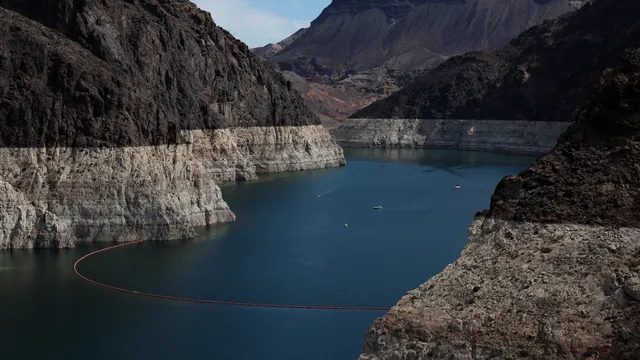
In the United States, Lake Mead has reached alarming water levels, sitting just inches above its lowest recorded point. This situation is a direct result of extreme heat, prolonged drought, and significant evaporation, which have all contributed to the reservoir's decline. The Colorado River, which feeds Lake Mead, is under immense pressure due to these environmental factors, affecting water supply for approximately 35 to 40 million people across seven states, including Arizona, California, and Nevada. The U.S. Bureau of Reclamation has reported that the Colorado River system storage is at about 36 percent of its capacity, raising concerns about future water deliveries and hydropower generation.
The ongoing drought has been exacerbated by the lowest winter snowpack on record and record-breaking spring heat, which have further strained the Colorado River system. Experts, including hydrology professor David Kreamer from the University of Nevada, Las Vegas, have noted that Lake Mead loses more than six feet of water depth annually due to evaporation alone. This loss is compounded by years of below-average runoff from the Rocky Mountains and challenges in managing water use among the states reliant on the river.