
Topic overview
Briefly
- Two fires broke out on Salamis island, killing two and forcing evacuations.
- Hundreds evacuated by sea and land; nine people treated for burns.
- Fires spread through pine forest, fueled by strong winds and dry conditions.
What happened
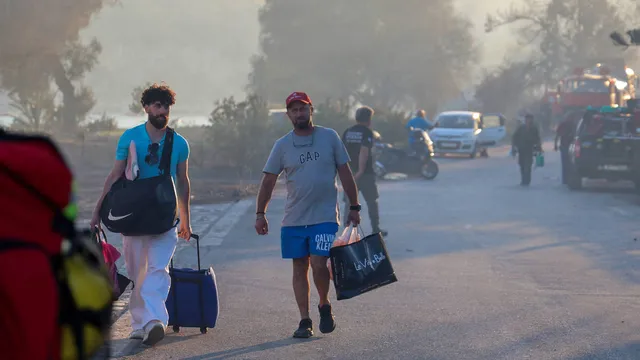
On Sunday, August 16, 2026, two wildfires broke out almost simultaneously on the Greek island of Salamis, near Athens, leading to the deaths of two people and the evacuation of hundreds of residents and beachgoers. The fires started in the Peristeria and Selinia areas, popular beaches in the south and east of the island. The fire department reported that two bodies were recovered from the Peristeria beach area. The civil protection ministry issued four evacuation orders in quick succession as the fires spread through pine forest and bush, threatening inhabited areas. Hundreds of people, including many elderly residents, were evacuated by land and sea, with the coastguard dispatching seven patrol boats and other private vessels to assist. Around 90 people were evacuated by sea. Nine people required medical care for burns. The fires were fueled by unusually strong winds that have been affecting Greece since late July, contributing to several major wildfires across the country. Earlier, firefighters had largely contained a blaze on the Aegean island of Skyros. The fires in Greece are part of a broader pattern of wildfires across Europe, exacerbated by a historically hot summer and tinder-dry conditions. In Belgium, a record wildfire in the east had grown to nearly 3,000 hectares, with military helicopters and tractors assisting firefighters. In Croatia, police arrested four people suspected of starting some wildfires on the Adriatic coast. In France, a fire that burned 1,700 hectares in Landes was stabilized after three days, with temperatures dropping and humidity rising. The Greek fire department has been stretched, with five firefighters having died so far this season, including a Danish pilot killed in a mid-air collision. Winds were expected to ease later Sunday, and for the first time in 10 days, no area in Greece was above level three on the national fire risk scale. Experts attribute the increasing frequency and severity of wildfires to human-induced climate change, which has made droughts and extreme weather events more common.

Comprehensive report
Full story,
in detail.
Trace the developments that led here, see how the story evolved, and understand the forces and wider context surrounding it.