
Topic overview
Briefly
- Typhoon Dolphin moved inland to Hubei province, prompting severe weather warnings.
- Authorities issued an orange alert for heavy rain, predicting up to 9.8 inches in 24 hours.
- The storm's impact has led to closures and emergency responses, highlighting the risks of flooding.
What happened
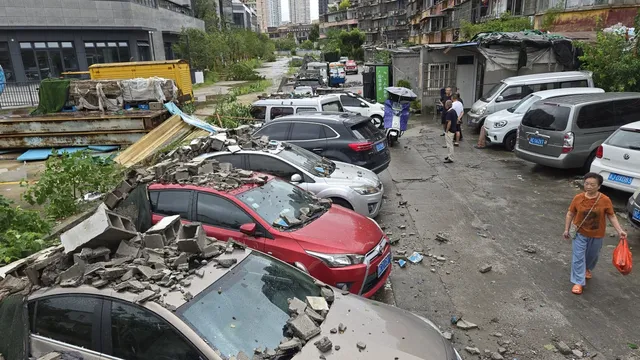
On August 11, 2026, Typhoon Dolphin made its way deeper into Hubei province, China, leading to significant weather warnings and disruptions. The typhoon, which is noted as the strongest to impact China this year, has already traveled over 3,700 miles before making landfall, affecting the eastern coast with heavy rainfall. As it moved inland, authorities in Hubei issued an orange alert for heavy rain, predicting that northwestern areas could receive up to 9.8 inches of rain within a 24-hour period. This situation has prompted the closure of tourist attractions and the suspension of high-risk construction projects across the province.
Hubei, a vital hub for auto and high-tech electronics manufacturing, is home to over 58 million residents. The region has recently experienced severe weather, including two rare tornadoes last month following Typhoon Maysak, which resulted in at least 11 fatalities. The National Meteorological Center's warnings reflect the heightened risk of flooding and landslides, particularly in cities like Xiangyang, Huanggang, and Suizhou. The storm's peripheral airflow is expected to intensify rainfall as it encounters the mountainous terrain in Hubei's western region, further exacerbating the flooding risks.
In addition to Hubei, neighboring Henan province has also issued a red flash-flood alert as the storm continues to push moisture northward. The impact of Typhoon Dolphin is anticipated to reach as far as Beijing, which is over 600 miles away from Hubei. In response, four districts on the outskirts of the capital have activated Level I emergency flood responses, preparing for the possibility of receiving more than one-third of their annual rainfall within a single day.
The situation remains critical as authorities monitor the storm's progression and its potential effects on infrastructure and public safety. The combination of heavy rainfall, flooding risks, and the ongoing pandemic complicates the response efforts, as local governments work to ensure the safety of residents and minimize damage to property and the economy.

Comprehensive report
Full story,
in detail.
Trace the developments that led here, see how the story evolved, and understand the forces and wider context surrounding it.