
Topic overview
Briefly
- Oil tankers are covertly transiting Hormuz to transfer barrels in the Gulf of Oman.
- The shuttling has been ongoing for months, but tracking is difficult due to hidden locations.
- UAE, Iraq, Qatar, and Kuwait have used this method; Saudi Arabia has not yet.
What happened
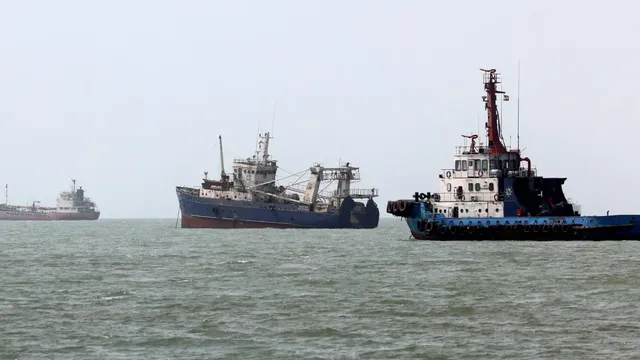
The trade of ferrying oil through the Strait of Hormuz undetected to transfer barrels onto tankers in the Gulf of Oman is running at full tilt, despite recent attacks on vessels, according to people with knowledge of the shipments. These incognito crossings of the world's most vital energy chokepoint have become a major lifeline for global markets that were bracing for a much worse supply shock when the Iran war broke out. For producers in the region, the situation is far from normal, however, with ships subject to repeated hostility even though they have some military protection, the people said. The shuttling has been ongoing for months, but tracking how much oil those "dark" ships are moving is a challenge for traders and analysts alike because vessels are protecting themselves by giving little clue about their locations. They spoke on condition of anonymity given the sensitivity of the matter.
Before the Iran war, about 20 million barrels a day crossed Hormuz, roughly a fifth of the world's oil supply. The dark shuttle transits have combined with pipeline workarounds, stockpile releases and reductions in demand across the world to limit the economic hit from the war. "Despite the repeated targeting of our vessels, we are determined to continue meeting our responsibility to safely deliver energy to global markets and to meet our customer commitments and needs as much as possible," the United Arab Emirates' state oil giant Abu Dhabi National Oil Co. said in response to a request for comment for this story. "Like other energy companies in the region, we continue to bear the direct consequences of unprovoked attacks on our people, our ships and our facilities — attacks that place employees, contractors and seafarers at increased risk while disrupting critical energy flows."
In addition to the UAE, barrels from Iraq, Qatar and Kuwait have all been ferried through Hormuz, according to vessel-tracking data compiled by Bloomberg, as well as Kpler and Vortexa data. People with knowledge of the UAE's shipments said there was little indication of a slowdown, even after it reported more Iranian attacks on its ships in recent days. Still, exporting large amounts of oil in the middle of a war is far from straightforward. They offer a reminder that the cost of keeping energy prices low across the globe isn't without risk — several seafarers have died transiting Hormuz and there are a growing number of regional oil spills. "An attack on the infrastructure that keeps energy flowing is not simply an attack on a company," it said. "The disruption in the Strait of Hormuz is inflicting profound damage far beyond those directly impacted in this region." Read more: Oil Spills Show Cost of Moving Middle East Barrels. The attacks can occasionally delay shipments, and while hold-ups are usually brief, they add to market uncertainty, buyers in Asia said.
One country that hasn't yet been shuttling large volumes of its own barrels is Saudi Arabia. Two ships were seen loading at Saudi Arabia's giant Ras Tanura export hub in the Gulf last week, while the nation's tanker company Bahri has been steadily positioning vessels off Oman's coast, where the transfers from shuttling vessels are carried out. In total, 16 supertankers are there now, with three more on the way in the coming days. Oil producer Saudi Aramco declined to comment. Bahri didn't respond to a request for comment. Elsewhere, a handful of companies have recently been buying Iraqi barrels and shuttling them out of Hormuz, providing an outlet for one of the Gulf countries that has struggled most to move its barrels during the war.

Comprehensive report
Full story,
in detail.
Trace the developments that led here, see how the story evolved, and understand the forces and wider context surrounding it.