
Topic overview
Briefly
- Trump signed an order to split the MMR vaccine into three separate shots during different doctor's
- Cassidy criticized the order, saying it will decrease immunization rates and cost families more
- Cassidy previously said RFK Jr. promised not to change the Advisory Committee on Immunization
What happened
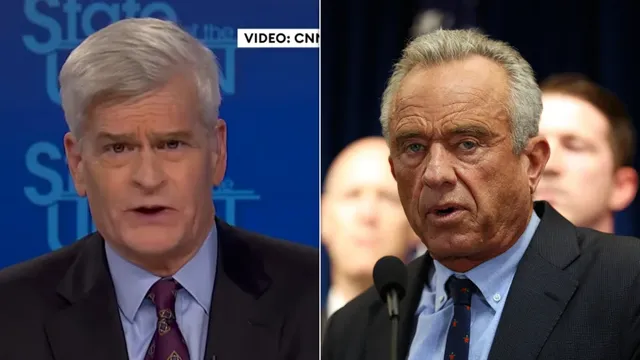
Senator Bill Cassidy, a Republican from Louisiana who chairs the Senate Health, Education, Labor, and Pensions Committee, is facing continued scrutiny over his decisive vote to confirm Robert F. Kennedy Jr. as Secretary of the U.S. Department of Health and Human Services. During an appearance on CNN's "State of the Union" on Sunday, host Jake Tapper pressed Cassidy on whether he regretted his confirmation vote, given Kennedy's 22-year history of spreading vaccine disinformation. Cassidy, a physician, avoided taking direct accountability for his decision, stating that "people always want to bring that up" and arguing that such questions distract from the goal of "making America healthy again." He emphasized that efforts should focus on increasing immunization rates rather than decreasing them.
The controversy surrounding Kennedy's appointment has intensified following recent executive actions by former President Donald Trump. Last week, Trump signed an executive order to split the MMR vaccine—which protects against measles, mumps, and rubella—into three separate shots administered during different doctor visits. Trump justified this decision by claiming, without scientific evidence, that combination shots deliver an unsafe volume of fluid and can lead to autism. Cassidy publicly criticized this policy, stating that it would decrease immunization rates, be less convenient for families, and cost them more money. He argued that this is where public focus should be directed rather than on his confirmation vote.
Earlier in the month, Trump also signed another executive order recommending that children receive vaccines for only 11 diseases instead of the 18 recommended by the Centers for Disease Control and Prevention in 2024. This move faced significant pushback from major medical organizations. When previously questioned on CNBC's "Squawk Box" about his vote, Cassidy deflected by noting that Kennedy had personally assured him he would not change the Advisory Committee on Immunization Practices, which establishes official federal vaccine recommendations and schedules. Cassidy suggested that he could not have predicted Kennedy would not honor his promises, quipping that if he could see into the future, he would be discussing stock futures rather than vaccine policy.
The situation highlights the ongoing tension between established public health guidance and the influence of vaccine skepticism within the Trump administration. Cassidy's position is particularly notable given his medical background and his role as chair of the Senate Health Committee, which places him at the center of national health policy debates. His refusal to express regret, despite Kennedy's long track record of promoting anti-vaccine conspiracy theories and the subsequent executive orders that align with those views, has drawn criticism from public health advocates who argue that the senator should have anticipated these outcomes based on Kennedy's extensive history of spreading misinformation about vaccines over more than two decades.

Comprehensive report
Full story,
in detail.
Trace the developments that led here, see how the story evolved, and understand the forces and wider context surrounding it.