
Topic overview
Briefly
- Iranian army chief Amir Hatami announced the bounty program through state-run IRNA news agency
- The reward doubles to $60,000 for Iranian women who kill or capture a US service member
- Hatami declared US forces are forbidden from entering the Persian Gulf, Gulf of Oman, and Strait ofH
What happened
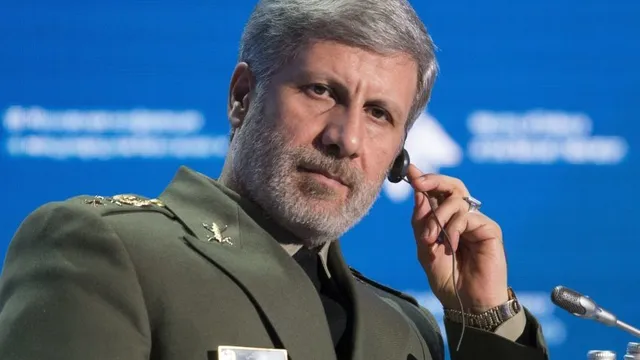
Iran's military leadership has publicly announced a financial incentive program targeting American military personnel, a move that significantly escalates the already tense relationship between Washington and Tehran. Army chief Amir Hatami declared that the Islamic Republic of Iran's Army will pay a reward equivalent to $30,000, or 5 billion tomans, to anyone who kills or captures an American service member. The announcement was made through the state-run IRNA news agency, where Hatami claimed the initiative was developed in response to a large number of requests from Iranian citizens expressing a desire to participate in such actions. The bounty program includes a specific provision that doubles the reward for Iranian women, potentially raising the payment to $60,000 for a female citizen who successfully kills or captures a US soldier. Hatami stated that the funding for these rewards would be provided by the Iranian people, though he did not elaborate on the mechanism for collecting or distributing these funds.
The timing and context of this announcement are critical to understanding its implications. The declaration comes amid an ongoing conflict that began at the end of February, during which 18 US service members have died. Despite the absence of US ground troops deployed inside Iran for combat operations, tensions have been high, with both American and Iranian forces trading attacks around the Strait of Hormuz. This vital waterway, which before hostilities began carried one-fifth of the world's oil supply, has become a focal point of contention. Iran has enforced a blockade of the strait, and just days before the bounty announcement, an oil tanker belonging to the Abu Dhabi National Oil Company was struck by what the UK Maritime Trade Operations Centre described as an unknown projectile. The USS Abraham Lincoln carrier strike group, originally scheduled to return home in May, had its deployment extended to support operations related to Iran.
Hatami's announcement did not specify where or when Iranians were expected to encounter US military personnel who could be targeted under the offer, leaving the directive dangerously vague and open to interpretation. This ambiguity raises concerns about potential attacks on American troops anywhere in the world, not just in the immediate vicinity of Iran. The army chief also renewed Tehran's demand that US forces leave the Middle East entirely and declared that American forces no longer have permission to enter the Persian Gulf, the Gulf of Oman, or the Strait of Hormuz. This assertion of control over international waterways directly challenges the US Navy's long-standing presence in the region and contradicts President Donald Trump's claim that the Strait of Hormuz would become a US territory. An Iranian official responded to Trump's statement on social media, insisting the strait has been, is, and will remain Iranian, and that it will only be closed and opened under Iran's command.
The bounty on US troops follows a pattern of Iranian officials promoting financial rewards for the killing of American political figures. On May 15, senior lawmaker Ebrahim Azizi revealed a proposed parliamentary measure that included a 50 million euro reward for the assassination of President Donald Trump, as reported by Iran International. This escalation in rhetoric and policy has contributed to a climate of fear and heightened security concerns in Washington. Reports emerged that the president was covertly transferred from the old Air Force One plane to another jet due to a threat on his life from Iran, a ruse that took place as Trump departed from a NATO Summit. While the president appeared to downplay the attempt, sources indicated that First Lady Melania Trump is increasingly concerned about his safety. The only known instance of US troops being on the ground in Iran during this period was a rescue mission in April, when a multi-day special operations effort successfully recovered both the pilot and weapons system officer from a downed F-15E Strike Eagle fighter.

Comprehensive report
Full story,
in detail.
Trace the developments that led here, see how the story evolved, and understand the forces and wider context surrounding it.