
Topic overview
Briefly
- Zhu Rongji passed away in Beijing at the age of 97 after an illness.
- He served as Chinese premier from 1998 to 2003 and was a key architect of China's economic reforms.
- His death marks the end of an era for China's economic transformation and has sparked reflections on his legacy.
What happened
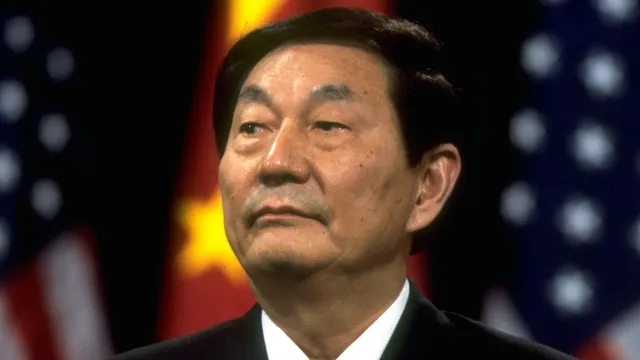
In Beijing, former Chinese Premier Zhu Rongji passed away at the age of 97 after battling an illness. His death was reported by state media, which noted that he died around 11 a.m. on a Wednesday. Zhu served as premier from 1998 to 2003 and was a key figure in China's economic transformation, credited with implementing significant market reforms that propelled the country into a new era of growth. His leadership was instrumental in China's accession to the World Trade Organization in 2001, which marked a pivotal moment in the nation's integration into the global economy.
Zhu's political career was marked by a series of challenges, including a period of exile during the late 1950s when he was labeled a 'rightist' for advocating reforms in other communist nations. After rejoining the Communist Party following the Cultural Revolution, he rose through the ranks, eventually becoming vice premier in 1991 and a member of the Politburo Standing Committee in 1993. His tenure as premier was characterized by a commitment to reforming state-owned enterprises and promoting home ownership, which significantly altered the landscape of urban housing in China.
Despite facing opposition from conservative elements within the Communist Party, Zhu's reforms led to a dramatic increase in economic output and helped China become the world's largest exporter. His approach to governance was often described as demanding, earning him nicknames such as 'Madman Zhu' due to his forthright criticism of government inefficiencies. Zhu's legacy is complex; while his policies lifted millions out of poverty, they also contributed to rising inequality, a concern that has become more pronounced in recent years under the leadership of Xi Jinping.
Zhu's passing has prompted widespread reflection on his contributions to China's development. Many have taken to social media to express their condolences and share memories of his leadership. His obituary highlighted his dedication to the Communist Party and the people of China, emphasizing the significant impact he had on the nation's economic trajectory. As China continues to navigate its path in the global economy, Zhu Rongji's influence remains a topic of discussion among policymakers and scholars alike.

Comprehensive report
Full story,
in detail.
Trace the developments that led here, see how the story evolved, and understand the forces and wider context surrounding it.