
Topic overview
In brief
- Chinese scientists have proposed a method to prevent asteroid impacts by drilling into them and detonating nuclear devices.
- Simulations indicate that a nuclear explosion could effectively alter the trajectory of asteroids of various sizes.
- The study highlights the need for early detection and international collaboration in planetary defense against asteroid threats.
Summary
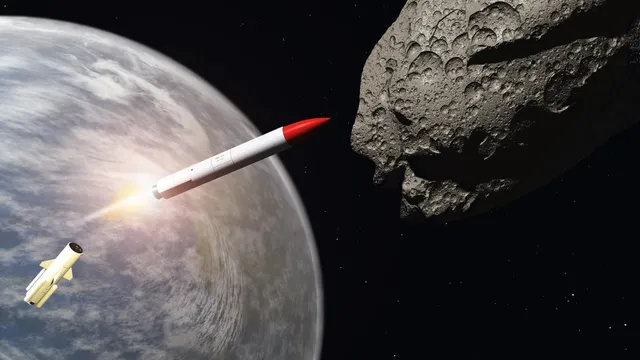
In recent months, researchers from the China Academy of Launch Vehicle Technology in Beijing have put forward a controversial method to combat potential asteroid threats to Earth. Their proposal involves drilling into an asteroid and detonating a nuclear device within it, a strategy reminiscent of the fictional plot in the movie 'Armageddon.' The scientists conducted computer simulations to assess the effectiveness of this method against various sizes and speeds of asteroids, concluding that a nuclear explosion could effectively alter the trajectory of an approaching asteroid. For instance, a 300-kiloton nuclear blast could obliterate a 164-foot asteroid, while a 3-megaton explosion could destroy a nearly 1,000-meter asteroid. The depth of the detonation is crucial, as deeper explosions significantly increase the change in the asteroid's velocity. However, the success of this strategy hinges on early detection of the asteroid threat, allowing sufficient time to execute the mission. The researchers emphasized the strategic importance of their study in enhancing humanity's capability to respond to asteroid impact threats, especially given the increasing number of near-miss asteroids. This proposal comes at a time when NASA has warned of the existence of thousands of undetected asteroids that could potentially cause catastrophic damage if they were to collide with Earth. The urgency of developing effective planetary defense systems is underscored by the fact that warning times for such threats can be as short as days to weeks, making traditional countermeasures like the DART mission insufficient in many scenarios. The implications of this research could be profound, as it opens up new avenues for planetary defense and highlights the need for international collaboration in addressing the risks posed by near-Earth objects.