
Topic overview
Briefly
- Sen. Ossoff blamed Trump for high costs of groceries, energy, and school supplies.
- Trump accused Democrats of seeking a communist country and warring on police.
- Democrats are trying to postpone internal arguments over ideological splits.
What happened
The 2026 midterm elections are approaching, and the political landscape is defined by a sharp contrast between Democratic and Republican visions for the country, as illustrated by two rallies held nearly 1,000 miles apart. In Atlanta on Sunday, Georgia Senator Jon Ossoff, a Democrat, launched a direct attack on President Donald Trump's economic record. He specifically linked the president to the high cost of living, stating that under Trump, it costs more to stock a refrigerator, power a home, buy coffee, purchase school supplies, or acquire a tractor for a farm. This critique forms a central pillar of the Democratic strategy to connect Republican candidates to the president's perceived failures on affordability.
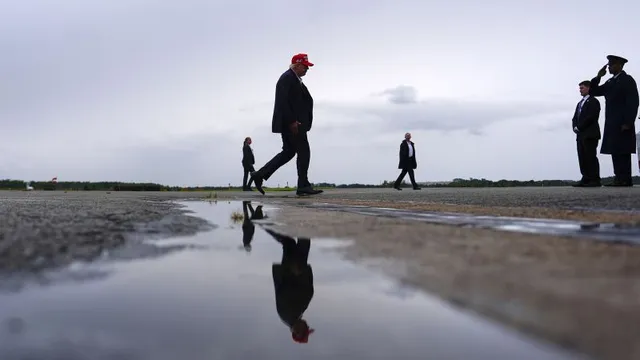
President Trump, facing the prospect of lame-duck status, is pursuing a two-pronged campaign strategy. He is simultaneously touting his presidency as a historic success while branding the Democratic opposition as an unacceptable, extremist choice. At a rally, he accused Democrats of wanting to turn the United States into a communist country and of declaring war on the police and the rule of law. This divisive rhetoric is a key component of his effort to energize his base. However, this approach carries a significant risk, as it may alienate the independent and moderate voters in key states who were crucial to his previous electoral coalition.
The president's messaging on the economy and foreign policy has shown vulnerabilities. His apparent indifference to affordability issues, which he has dismissed as fabricated Democratic talking points, threatens to undermine the more positive aspects of his economic message, such as larger tax refunds from the GOP's 2025 domestic policy bill and efforts to lower prescription drug prices. Furthermore, his position on the conflict with Iran was exposed when he seemed to belittle the pain the war has caused domestically. This creates an opening for Democrats, who are arguing that the president is selling a fantasy, disconnected from the realities of high prices and a foreign war with no end in sight.
Internal Democratic dynamics are also at play as the party seeks to build a unified front for a potential blue wave in November. The party is attempting to postpone arguments over ideological splits that have surfaced in primary campaigns. Representative Ro Khanna voiced support for a Medicare-for-All healthcare system, a position favored by progressive candidates. In contrast, Representative Hakeem Jeffries, a member of Democratic leadership, distanced himself from several policies attributed to the party by Trump, explicitly stating he does not support defunding the police, open borders, or abolishing the Senate. This careful positioning reflects the party's effort to counter Republican attacks while managing its internal ideological diversity. The central question for voters, as framed by the competing rallies, is which vision of America is real: one of a successful golden age or one of economic struggle and endless war.

Comprehensive report
Full story,
in detail.
Trace the developments that led here, see how the story evolved, and understand the forces and wider context surrounding it.