
Topic overview
Briefly
- A passenger train derailed in East Sussex, leading to a rapid emergency response.
- All passengers were evacuated safely, with no deaths or serious injuries reported.
- Major disruption to rail services in the area is expected as investigations continue.
What happened
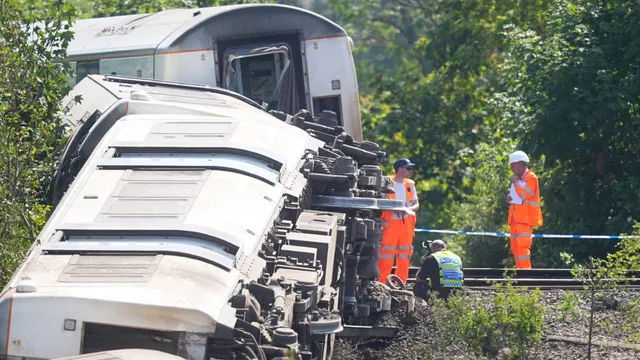
In East Sussex, England, a passenger train derailed between Haywards Heath and Lewes just before 4 PM on August 13, 2026. The incident prompted a swift emergency response, with images showing at least two carriages overturned. Passengers were seen standing on top of the toppled carriages, while emergency workers attended to the scene. Fortunately, all passengers were evacuated safely, and there were no reported deaths or serious injuries. However, the derailment led to the closure of several rail routes, significantly affecting travel in the area.
Southern Rail confirmed that services between Brighton and Lewes, Haywards Heath and Lewes, and Seaford/Eastbourne and Lewes were disrupted. Passengers were advised to delay their journeys or seek alternative routes. Emergency services, including paramedics and the fire service, were deployed to the scene to assist those affected. British Transport Police also stated they were responding to the incident and would provide updates as more information became available.
Heidi Alexander, the transport secretary, expressed her concern over the derailment and thanked emergency services for their prompt response. She mentioned that efforts were underway to support the impacted passengers and work with the rail industry to restore services. The incident has raised questions about rail safety and the measures in place to prevent such occurrences in the future.
As the situation develops, authorities are expected to conduct a thorough investigation into the cause of the derailment. The disruption to rail services is likely to continue for some time, affecting many commuters and travelers in the region. The incident serves as a reminder of the importance of safety protocols in the rail industry and the need for ongoing improvements to infrastructure and emergency response procedures.

Comprehensive report
Full story,
in detail.
Trace the developments that led here, see how the story evolved, and understand the forces and wider context surrounding it.