
Topic overview
In brief
- Researchers confirmed that Saxifraga candelabrum, a plant from southwest China, is carnivorous.
- The study demonstrated that the plant can digest and absorb nutrients from trapped insects.
- This discovery supports Darwin's 1875 hypothesis about the carnivorous nature of related species.
Summary
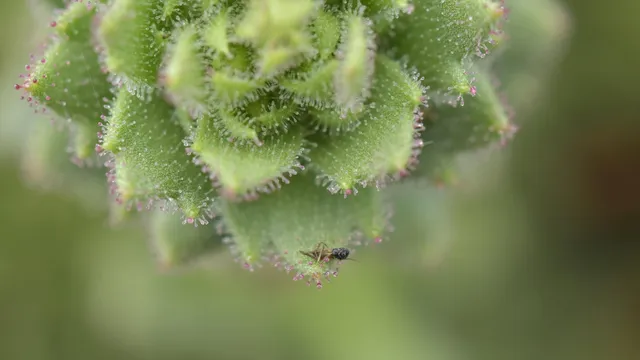
In a significant discovery, researchers have confirmed that a flowering plant known as Saxifraga candelabrum, native to the alpine regions of southwest China, exhibits carnivorous behavior. This finding supports a hypothesis proposed by Charles Darwin over 150 years ago regarding the potential carnivorous nature of certain related species. The plant thrives at elevations exceeding 8,200 feet in the Hengduan Mountains, an area that connects the Tibetan Plateau to the Yunnan-Guizhou Plateau. The study, published on August 4, 2026, in the journal Nature Communications, highlights the plant's unique adaptations to its nutrient-poor environment, where it has evolved sticky hairs to trap small insects, primarily nonbiting midges.
Prior to this study, scientists were uncertain whether the insects caught by S. candelabrum were actually ingested and digested by the plant. The research team conducted field observations and herbarium surveys, revealing that mature plants could trap an average of 71 insects. To confirm the plant's carnivorous nature, the researchers fed S. candelabrum fruit flies labeled with a stable form of nitrogen. The results showed a significant increase in stable nitrogen levels in the plant, indicating that it digests and absorbs nutrients from its prey. This was contrasted with a non-carnivorous control plant, which did not exhibit any increase in nitrogen levels.