
Topic overview
Briefly
- Israeli voters now prioritize domestic issues over Palestinian statehood, a shift from past election
- Demand for inquiry into October 7 security failures threatens Netanyahu's political future
- Judicial overhaul and Haredi conscription deepen divisions between right and liberal factions
What happened
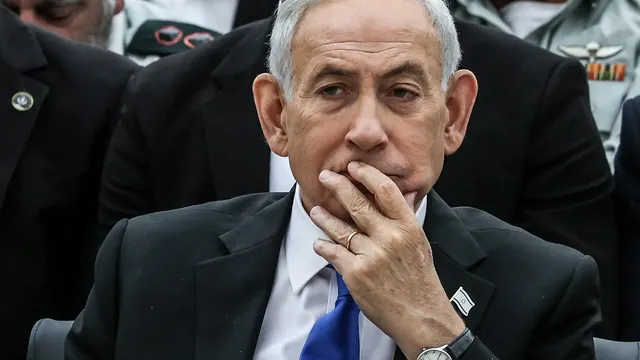
In the lead-up to Israel's October elections, the political landscape has shifted dramatically. Historically, a key fault line between Israel's right and liberal wings was the future of dealings with Palestinians, including the possibility of a two-state solution. However, today there is near-universal animosity towards Palestinians among Jewish Israeli voters, and the prospect of a two-state solution has been completely sidelined. The October 7 attack continues to dominate public consciousness, while the deaths of over 73,000 Palestinians in Gaza are largely ignored. Instead, Israelis are focused on domestic concerns, particularly the demand for an inquiry into the security failures that allowed the attack, and Prime Minister Benjamin Netanyahu's role in it. Netanyahu has used the ongoing wars to argue against holding such an inquiry, but many Israelis, even within his own Likud party, are reluctant to vote for him.
The election is also seen as a referendum on the fundamental nature of governance and democracy in Israel. The right-wing coalition's judicial overhaul, which critics view as anti-democratic, has deepened divisions. The far right has also sought to oust Attorney General Gali Baharav-Miara and place loyalists in key security positions. On the other side, secular and liberal opposition factions view this election as the last chance to save Israeli democracy and restore eroded institutions. Politicians across the spectrum are deliberately avoiding the Palestinian issue, focusing instead on domestic concerns of Jewish Israeli voters.
Palestinian citizens of Israel, who are allowed to vote, face a bleak situation. Most mainstream Jewish parties have ruled out forming a coalition with Arab parties, leaving Palestinians without a voice amid endemic violence and organized crime. This year, 158 Palestinian citizens of Israel have been murdered. Many Palestinians feel that lawlessness in their neighborhoods and settler assaults in the West Bank are designed to prevent them from voting. Sociologist Yehouda Shenhav-Shahrabani notes that there is very little sympathy for Palestinians in much of Israel.
The ultra-Orthodox (Haredi) community and their parties, Shas and United Torah Judaism, will likely focus on attempts to conscript their members into the military, a contentious issue that has sparked heated rhetoric from secular, often right-wing politicians. This issue adds another layer to the complex electoral dynamics, as the Haredi parties are key coalition partners for Netanyahu.
Overall, the election is characterized by a deep divide over the judicial overhaul and the future of Israeli democracy, with the Palestinian issue largely ignored. The outcome will determine not only the fate of Netanyahu but also the direction of Israeli governance and its relationship with the Palestinian population.

Comprehensive report
Full story,
in detail.
Trace the developments that led here, see how the story evolved, and understand the forces and wider context surrounding it.