
Topic overview
Briefly
- Blanche said no attorney general should ever pledge independence from the White House.
- Critics called the refusal an appalling departure from post-Watergate Justice Department norms.
- Blanche confirmed a proposed compensation fund for people claiming government mistreatment is dead.
What happened
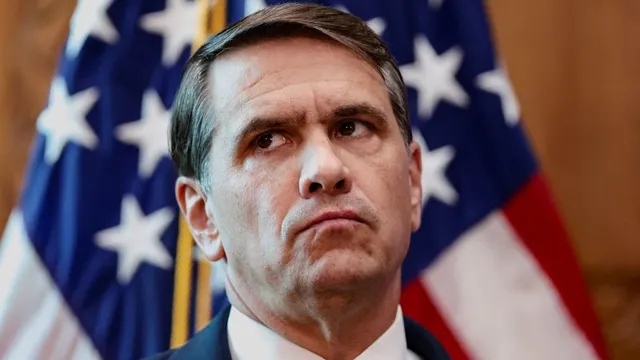
In a series of Sunday morning television interviews, newly confirmed United States Attorney General Todd Blanche sparked controversy by refusing to commit to the Department of Justice acting independently of the White House. During an appearance on NBC's "Meet the Press," host Kristen Welker directly asked Blanche if he would pledge that the department would always act independently. Blanche responded, "No, I'm not going to pledge that, and no attorney general should ever pledge that." He elaborated that President Donald Trump has never asked him to cross a legal or ethical line and never will, describing the narrative of potential White House interference as a "false narrative" pushed by the left and the media. Blanche, who previously served as Trump's personal criminal defense attorney, was narrowly confirmed by the Senate just days earlier, with all Democrats and two Republicans—Senators Lisa Murkowski of Alaska and Susan Collins of Maine—voting against his nomination.
The attorney general's remarks drew immediate and sharp criticism from legal experts, political commentators, and former officials. University of Michigan law professor Barb McQuade characterized Blanche's stance as "an appalling departure" from the Justice Department's post-Watergate mission, which was established to ensure prosecutorial independence after the scandal that led to President Richard Nixon's resignation. Former Meet the Press host Chuck Todd called the statement a "pretty amazing confession" and expressed disbelief that Blanche was confirmed. Democratic strategist Xochitl Hinojosa noted that every previous attorney general had been able to pledge independence from the White House on criminal matters. The backlash centered on concerns that the Justice Department under Blanche would function as a political instrument for the president rather than an impartial law enforcement agency.
Blanche defended his position by arguing that the president, as head of the executive branch, is entitled to set broad law enforcement priorities. He distinguished between lawful presidential direction—such as Trump's directive to target violent criminals—and improper political interference in individual cases. Blanche insisted that Trump does not call him in the morning demanding specific prosecutions, calling that idea a "misnomer." However, he also indicated he would consider the president's views on individual prosecution decisions, stating that "every American has a voice in prosecutions" and that he would take Trump's perspective into account. This position was tested by questions about the Reflecting Pool vandalism case, which the U.S. Attorney for the District of Columbia recently dismissed despite Trump's public calls to revisit it. Blanche supported the local prosecutor, Jeanine Pirro, while acknowledging the president's frustration with the outcome.
The controversy occurs against a backdrop of broader concerns about the Justice Department's direction under the Trump administration. The department has faced accusations of political targeting, including indictments or attempted indictments against perceived presidential enemies such as former FBI Director James Comey and New York Attorney General Letitia James. Blanche also addressed other contentious issues, including the administration's efforts to obtain unredacted state voter rolls ahead of the midterm elections—a push fueled by Trump's baseless claims about the 2020 election. Blanche said appealing court losses on this matter to the Supreme Court was a "possibility." He also confirmed that a proposed "anti-weaponization" compensation fund, which had threatened to derail his confirmation, was "dead," though he would not rule out that individuals, including January 6 rioters, could seek payments through ordinary legal claims against the government. Blanche attempted to reconcile his promise to prosecute anyone who assaults federal law enforcement officers with Trump's blanket clemency for Capitol rioters by distinguishing between prosecutorial decisions and the president's constitutional pardon power.

Comprehensive report
Full story,
in detail.
Trace the developments that led here, see how the story evolved, and understand the forces and wider context surrounding it.